
Last updated August 25, 2026
Free on-site gate assessment - hinges, posts, and your LiftMaster or Nice gate operator checked before anything is quoted
The assessment is free and the quote is the invoice.
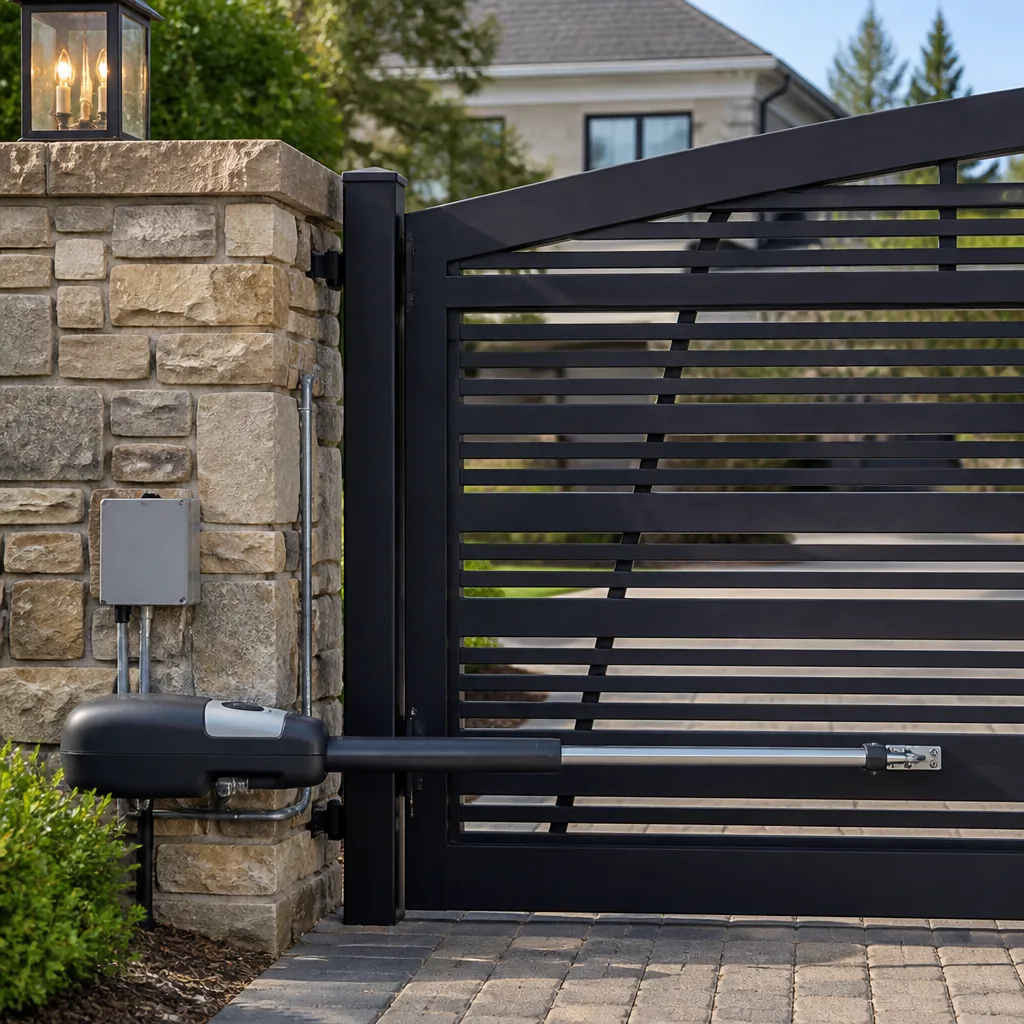
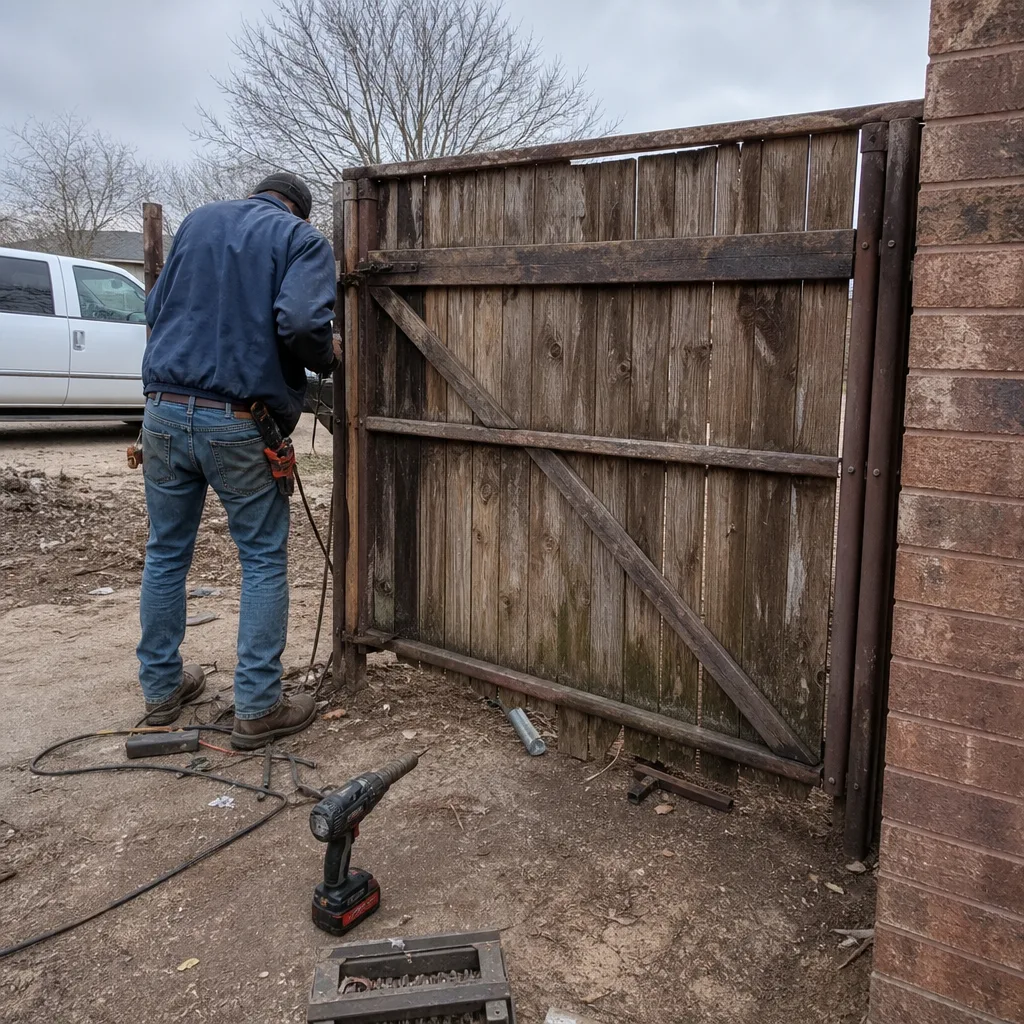 Before
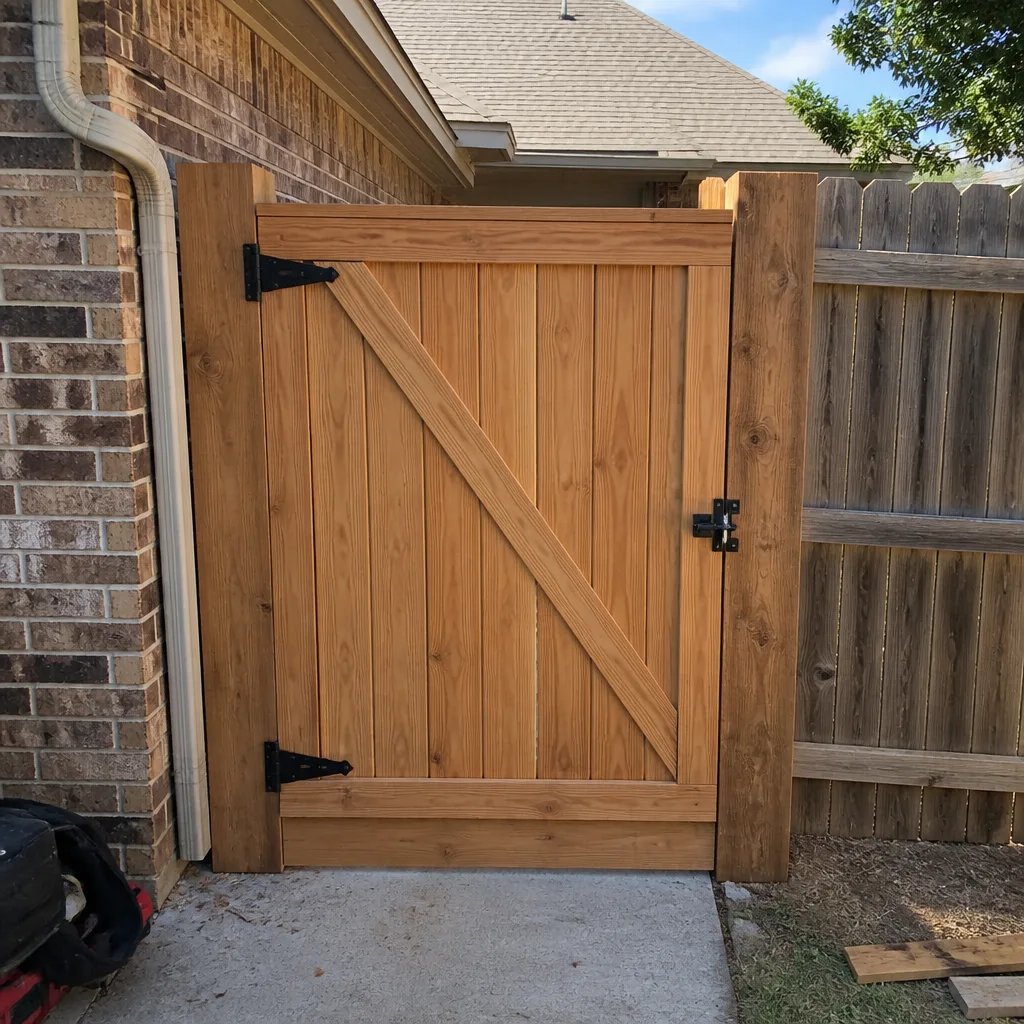 After
After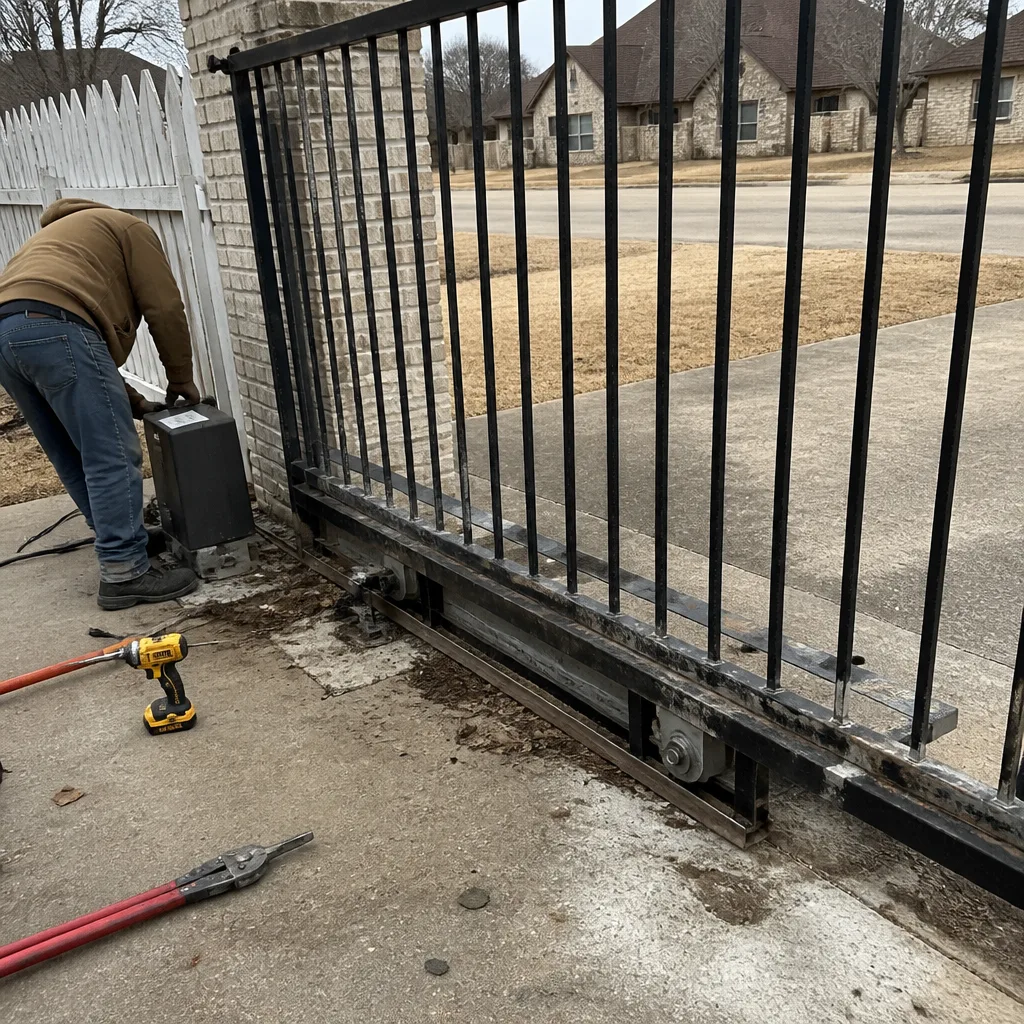 Before
 After
After Before
 After
AfterSeasonal Gate Repair Care for Burleson: Year-Round Homeowner’s Guide
Most homeowners in Burleson don’t think about their driveway gate until the day it refuses to open. That’s the expensive way to own a gate. A gate that gets a half-hour of seasonal attention costs roughly a third less to maintain over a decade than one that gets ignored until something snaps. This guide walks you through what your gate needs in every North Texas season, which problems show up when, and what you can safely handle yourself versus what belongs in the hands of someone who does this work every day. If you live in Burleson, this is the only seasonal gate care guide written specifically for our soil, our weather, and the way gates actually fail here.
Quick Answer
Seasonal gate care in Burleson means checking hinges, wheels, chains, and opener settings four times a year, with the heaviest attention in spring (rain and soil movement) and fall (preparing for winter temperature swings). Most homeowner-level care takes under 30 minutes per season and prevents the majority of costly failures we see, including hinge sag, opener burnout, and track misalignment. If you do nothing else, lubricate moving parts twice a year and clear debris from the track monthly.
Table of Contents
- Spring Gate Care in Burleson: Rain, Soil Shift, and Hinge Checks
- Summer Gate Maintenance: Heat, Expansion, and Opener Strain
- Fall Gate Preparation: Leaves, Temperature Drops, and Pre-Winter Tune-Ups
- Winter Gate Care: Cold Snaps, Battery Health, and Frozen Components
- Monthly Gate Checks Every Burleson Homeowner Should Do
- Signs Your Gate Needs Repair Before the Season Changes
- What a Homeowner Can Safely Do Versus What Needs a Professional
- Common Mistakes to Avoid
- When to Call a Professional
- Frequently Asked Questions
- The Bottom Line
Spring Gate Care in Burleson: Rain, Soil Shift, and Hinge Checks
Spring is the season we get the most repair calls in Burleson, and the reason is almost always the same. The clay soil under Johnson County driveways expands and contracts dramatically with spring rainfall, which shifts gate posts and throws the entire gate out of alignment. A gate that closed perfectly in February will drag, bind, or stop latching by April. This is not a defect in your gate. It is the ground moving underneath it.
Start your spring check by standing at the latch end of the gate and looking at the gap where it meets the post. That gap should be even from top to bottom. If it narrows at the top or the bottom, the gate has sagged or the post has shifted. Next, press down on the free end of the gate. Any movement beyond a quarter inch means the hinges have worn or the post is loose in the ground. Both problems get worse through the summer if they are not corrected.
Spring Checklist
- Inspect the latch gap for even spacing from top to bottom.
- Press down on the gate end and check for hinge play or post movement.
- Clear out any leaves, mud, or debris packed into the track or hinge areas.
- Check the chain or belt tension on automated gates. Spring humidity can cause chains to loosen or rust.
- Run a full open and close cycle and listen for grinding, squealing, or hesitation.
- Look for rust spots forming on welds or bolt heads, especially after heavy rain.
One thing we have seen repeatedly in neighborhoods like Hidden Creek and Mistletoe Hill is gate posts set in concrete that was poured shallow. When spring rains soften the ground, the whole post leans, sometimes by an inch or more. A leaning post is not something to prop back with a rock and call fixed. The post needs to be reset, or the gate will fight itself on every cycle and burn out the opener within a season or two. At Ironworks Gate Co., we reset posts with deeper footings and proper concrete, so the fix holds through the next ten wet springs rather than the next one.
Summer Gate Maintenance: Heat, Expansion, and Opener Strain
Burleson summers are hard on everything made of metal, and your gate is no exception. Steel expands when it gets hot, and a black gate sitting in direct Texas sun can reach surface temperatures over 150 degrees. That expansion changes the geometry of the gate slightly. Panels that fit cleanly at 70 degrees will rub at 100 degrees. If your gate only makes noise on the hottest afternoons, that is thermal expansion, not a broken component, but it still deserves attention.
The bigger summer problem is opener strain. Heat makes motors work harder, and a gate that is slightly out of balance or dragging on a worn wheel puts extra load on the opener at exactly the time the opener is already fighting the heat. We replace more opener circuit boards and motors in August than in any other month. The Mighty Mule and Ghost Controls units we service are built to handle heat, but no motor survives a gate that is binding against a misaligned track while also running in 100-degree weather.
Summer Care Steps
- Run the gate at the hottest part of the day and listen for new noises or slower operation.
- Check wheels and rollers for flat spots. A wheel that has stopped rolling drags the gate and strains the opener.
- Lubricate hinge pins and wheels with a light penetrating oil. Do not grease the track itself, which collects dust and grit.
- Inspect the opener housing for direct sun exposure. If possible, shade the opener or at least ensure its vents are not blocked.
- Test the auto-reverse and safety edges by placing a small object in the gate’s path during a closing cycle.
- Check for wasp nests or mud daubers inside the opener box. They love the shelter and will short out a board if left alone.
A homeowner in Burleson can handle most of this list. The one exception is anything involving opener electronics. If the motor is overheating, tripping its thermal protection, or behaving inconsistently, that is a job for someone who works on automation every week. We are trained and equipped on nine gate-automation brands, including DoorKing and Elite, so the correct fix is made on the first visit, not the third.
Fall Gate Preparation: Leaves, Temperature Drops, and Pre-Winter Tune-Ups
Fall is the most productive season for gate maintenance in Burleson. The weather is mild enough to work comfortably, and whatever you fix in October will carry the gate through the winter without interruption. The two fall tasks that matter most are clearing the track and checking the opener’s force settings.
Leaves are the obvious problem. Burleson’s mature oak trees drop enough foliage to pack a gate track solid within a few weeks. Compressed leaves hold moisture against the metal, promote rust, and create resistance that forces the opener to work harder. A track packed with wet leaves is also the most common cause of a gate that starts, strains, and then reverses or stops entirely. Clear the track weekly during leaf drop, not monthly.
The less obvious fall task is checking the opener’s force settings and limit switches. As temperatures drop, metal contracts, and a gate that ran fine all summer may now bind slightly or fail to close fully. The force setting controls how hard the opener pushes before it reverses. Too low, and the gate stops halfway. Too high, and the gate becomes a safety hazard. We recommend having this checked by a professional as part of an $89 Seasonal Tune-Up, because getting force settings wrong on an automated gate is a genuine safety issue. A gate that closes with too much force can hurt a person or a pet, and a gate that auto-reverses unpredictably can cause a car accident on the driveway.
Fall Tune-Up Summary
- Clear the track and wheels of leaves and debris at least weekly during heavy leaf drop.
- Inspect the chain or belt for stretch and adjust tension if needed.
- Check all bolts and bracket fasteners for looseness.
- Have a professional verify opener force settings and limit switches before winter.
- Apply a rust-inhibiting treatment to any bare metal or scuffed paint.
- Consider scheduling the $89 Seasonal Tune-Up before the first freeze.
Winter Gate Care: Cold Snaps, Battery Health, and Frozen Components
Burleson winters are not brutal by northern standards, but they are unpredictable. A week of 70-degree afternoons can drop to 20 degrees overnight, and that swing is harder on gates than a steady freeze. The two winter concerns we hear about most are backup batteries and moisture freezing inside components.
Every automated gate has a backup battery system, or should have one. These batteries are designed to power the gate through a power outage, but they only work if they are still healthy. Cold weather reduces battery output, and a battery that was already weak will fail exactly when you need it, which is during a winter storm power outage. If your gate is more than three years old and you have never had the backup battery checked, winter is the time to do it. A dead backup battery turns a working gate into a heavy metal wall that has to be manually released, usually in the cold and in the dark.
The other winter issue is freezing. Water gets into the track, the chain, or the opener housing during a wet week, and then a hard freeze locks everything in place. The gate will strain, trip its overload protection, or simply refuse to move. You should not force a frozen gate open. Forcing it can bend the chain, strip the gear teeth, or blow the opener’s capacitor. If your gate is frozen, either leave it alone until it thaws or call a professional who can assess whether any damage was done.
Winter Preparation Checklist
- Test the backup battery by unplugging the opener and running a full cycle.
- Check weather seals and gaskets around the opener housing.
- Clear any pooled water from the track or low spots near the gate.
- Verify that the manual release mechanism still works and is accessible.
- If the gate is frozen, do not force it. Wait for thaw or call for service.
Monthly Gate Checks Every Burleson Homeowner Should Do
Between seasons, a monthly five-minute check catches most problems before they become emergencies. You are looking for changes, not making judgments. Has the gate always made that noise? Does the latch look lower than it did last month? Is there a new rust spot near a weld? The goal is to notice when something shifts and get it addressed before it compounds.
The monthly routine is simple enough that we recommend writing it on a piece of tape and sticking it inside the garage near the opener control box. Most of our long-term customers in Burleson have been doing this for years, and their gates rarely need anything beyond a tune-up.
The Five-Minute Monthly Check
- Run one full open and close cycle. Stand where you can see and hear everything.
- Watch the wheels on the track. Every wheel should roll, not slide.
- Look at the gap between the gate and the latch post. Any change from.last month means something is moving.
- Feel the chain or belt tension with your hand. It should be firm, not floppy or rigid.
- Scan for new rust, cracks in welds, or loose bolts around the hinges and brackets.
That is the whole list. It takes less time than making a pot of coffee, and it will catch hinge wear, post movement, track misalignment, and opener issues before any of them become expensive repairs.
Signs Your Gate Needs Repair Before the Season Changes
Some problems can wait for the next tune-up. Others cannot. Knowing the difference saves you money, because a small problem caught early is a cheap fix, and a small problem ignored becomes a gate that won’t open at 7 in the morning when you are trying to leave for work. These are the signs we tell Burleson homeowners to treat as urgent.
Warning Signs That Mean Call Now
- The gate hesitates or stops mid-cycle. This usually means the opener is struggling against resistance or the limits are misaligned.
- The gate scrapes the ground or the track. Something has sagged. Every cycle is doing damage.
- The opener makes a grinding or buzzing sound. Grinding is gear wear. Buzzing is often a capacitor or motor failure starting.
- The gate bounces back when it closes. Your auto-reverse is triggering, which means something is in the way or the force setting is wrong.
- The keypad or remote works intermittently. This is usually a receiver board or antenna issue, not just a dying battery.
- The gate has visible rust at the welds or hinges. Rust at stress points is structural. It will fail, and when it fails, the gate falls or collapses.
If any of these signs show up, do not wait for the next seasonal check. Call us. A live person answers the phone at Ironworks Gate Co. 24 hours a day, 7 days a week. We will help you figure out whether it is urgent or can be scheduled, and we will never pressure you into a repair you do not need.
What a Homeowner Can Safely Do Versus What Needs a Professional
We believe homeowners should know how to care for their own gates. That is the entire point of this guide. But there is a line between maintenance and repair, and crossing that line on a gate, especially an automated gate, can be dangerous and expensive. Here is the honest split, from a company that has been fixing gates in this area for over 42 years.
Safe for a Homeowner
- Clearing debris from the track and wheels
- Lubricating hinges, wheels, and chain with the correct oil
- Checking for loose bolts and tightening them
- Testing the auto-reverse and safety edges
- Inspecting for rust, cracks, and visual wear
- Cleaning the keypad and solar panel, if you have one
Leave to a Professional
- Adjusting opener force settings and limit switches
- Repairing or replacing a chain, belt, or drive gear
- Working on any electrical wiring, circuit boards, or capacitor
- Resetting a leaning or shifting gate post
- Welding cracks or repairing broken hinges under load
- Any repair on a cantilever gate or a gate with failing structure
A note on safety, because it matters. Automated gates are powerful machines. A gate opener can exert enough force to injure an adult or trap a child. The springs, chains, and counterweights on a sliding or cantilever gate are under serious tension. If anything in this section involves load-bearing parts or electrical work, call someone who does this every day. Victor Salinas has been running Ironworks Gate Co. in Burleson since 2013, and our technicians are trained to respect both the metal and the motor. We work the way we would work on our own mothers’ gates, which is the standard we started with and the standard we will keep.
Common Mistakes to Avoid
- Greasing the track. Grease collects dust, grit, and leaves, turning your track into a grinding paste. Lubricate the wheels and bearings, not the rail.
- Ignoring a slow gate. A gate that moves slower than it used to is telling you something. The opener is working harder, and harder work means shorter life.
- Forcing a frozen gate. In cold weather, a frozen gate will break before it moves. The chain snaps, the gear strips, or the capacitor blows.
- Adjusting force settings without a force gauge. Too much closing force is a safety hazard. Too little means the gate never closes. This is not a guess-and-check adjustment.
- Propping a leaning post with a rock or a wedge. The post is moving because the footing failed. A prop hides the problem until the gate falls over.
- Skipping the seasonal tune-up because the gate “seems fine.” Gates fail gradually, then suddenly. The $89 Seasonal Tune-Up catches the gradual part.
- Replacing the remote before checking the receiver. If the remote was dropped, yes, replace it. If it just stopped working one day, the problem is usually the receiver board in the opener, and a new remote will not fix it.
When to Call a Professional
Call a professional when the problem involves electricity, structural welds, load-bearing posts, opener internals, or anything you are not completely sure about. If your gate is automated and you do not understand the safety systems, do not touch the force settings, the limits, or the wiring. A gate that auto-reverses unpredictably can hurt someone, and a gate that closes with too much force can do worse. If the gate is frozen, do not force it. If the post is leaning, do not prop it. If the opener is buzzing, do not keep pressing the remote hoping it sorts itself out.
Ironworks Gate Co. offers free estimates in Burleson. Call (469) 564-8046 and a live person will answer, any hour, any day. We will give you a square deal, an upfront price settled before a single bolt is turned, and a written 90-Day Done Right Promise on every job. If we fix it and it is not right, we come back and make it right. No paperwork, no arguing, no exceptions.
Frequently Asked Questions
We recommend a professional tune-up twice a year in Burleson, in spring and fall, with light homeowner-level checks monthly. The clay soil and temperature swings in this area make twice-yearly professional attention the sweet spot for catching post movement before it damages the gate. The $89 Seasonal Tune-Up covers the essentials, and it costs less than most repair calls. Call (469) 564-8046 to schedule yours.
The tune-up includes a full inspection of hinges, wheels, chain or belt, opener settings, safety edges, and backup battery, plus lubrication of all moving parts and adjustment of anything that has drifted out of spec. It is the gate equivalent of an oil change and a once-over, and it is the best value we offer for preventing expensive repairs. Schedule one in Burleson before winter sets in.
Most gate repairs in Burleson are completed by Ironworks Gate Co. in a single visit, and we keep common parts on our trucks for exactly that reason. A live person answers the phone 24/7, so we can often get someone out the day you call depending on the issue. Call (469) 564-8046 and tell us what the gate is doing, and we will give you an honest answer about timing.
In Burleson, the most common reason is soil expansion shifting the gate posts, which throws the gate out of alignment and binds the track. The second most common reason is water getting into the opener housing or safety edge wiring. Neither is a coincidence, and both get worse if you ignore them. We can diagnose it quickly and fix it properly.
Yes. Our technicians are trained and equipped on nine gate-automation brands, including LiftMaster, FAAC, BFT, Linear, Viking, Ghost Controls, DoorKing, Elite, and Mighty Mule. Whatever is on your driveway, we can service it correctly on the first visit. Many Burleson homeowners have openers from two or three of these brands installed over the years, and we work on all of them.
Gate repair in Burleson typically runs from $150 for minor adjustments to $1,200 or more for major structural work like post resetting or opener replacement. The most common repairs we do fall between $200 and $500. We quote the price up front before any work starts, and active offers include $50 Off Any Repair Over $250 and a Free Second Opinion on Any Written Estimate. Call (469) 564-8046 for an exact quote. Estimates are free.
The Bottom Line
A gate is a machine, and like every machine, it responds to consistent care. The homeowners in Burleson who get twenty years out of a gate without major repairs are the ones who clear the track, watch the latch gap, and call when something changes instead of waiting for the breakdown. Seasonal care is not complicated. Spring is for post and hinge checks. Summer is for heat and opener strain. Fall is for track clearing and force settings. Winter is for batteries and freezing. Do the monthly five-minute check, handle the safe maintenance yourself, and let a professional handle the electrics and the structure. That is the whole system, and it works. Ironworks Gate Co. is here when you need us, 24 hours a day, ready to keep your gate done right and backed in writing.
Written by Victor Salinas, Owner at Ironworks Gate Co. home, serving Burleson since 2013.