
Last updated August 25, 2026
Free on-site gate assessment - hinges, posts, and your LiftMaster or Nice gate operator checked before anything is quoted
The assessment is free and the quote is the invoice.
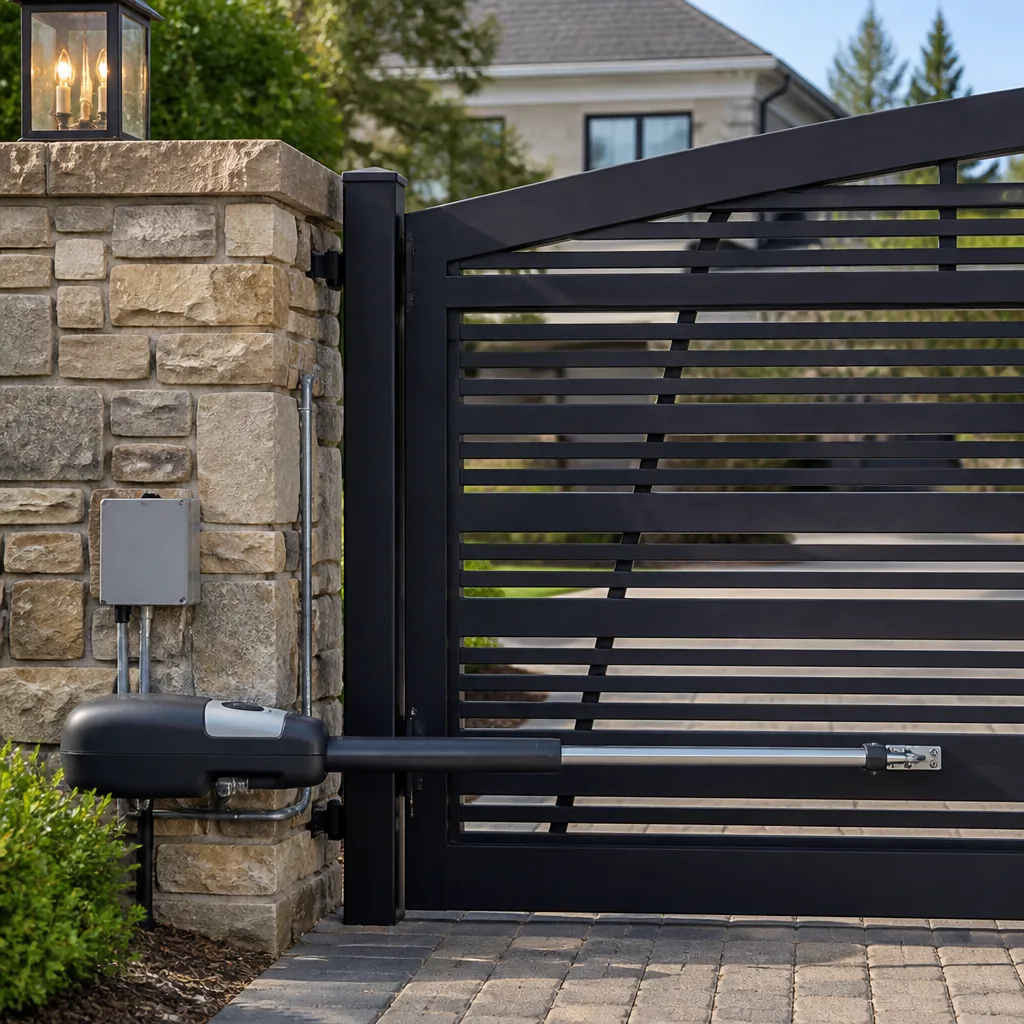
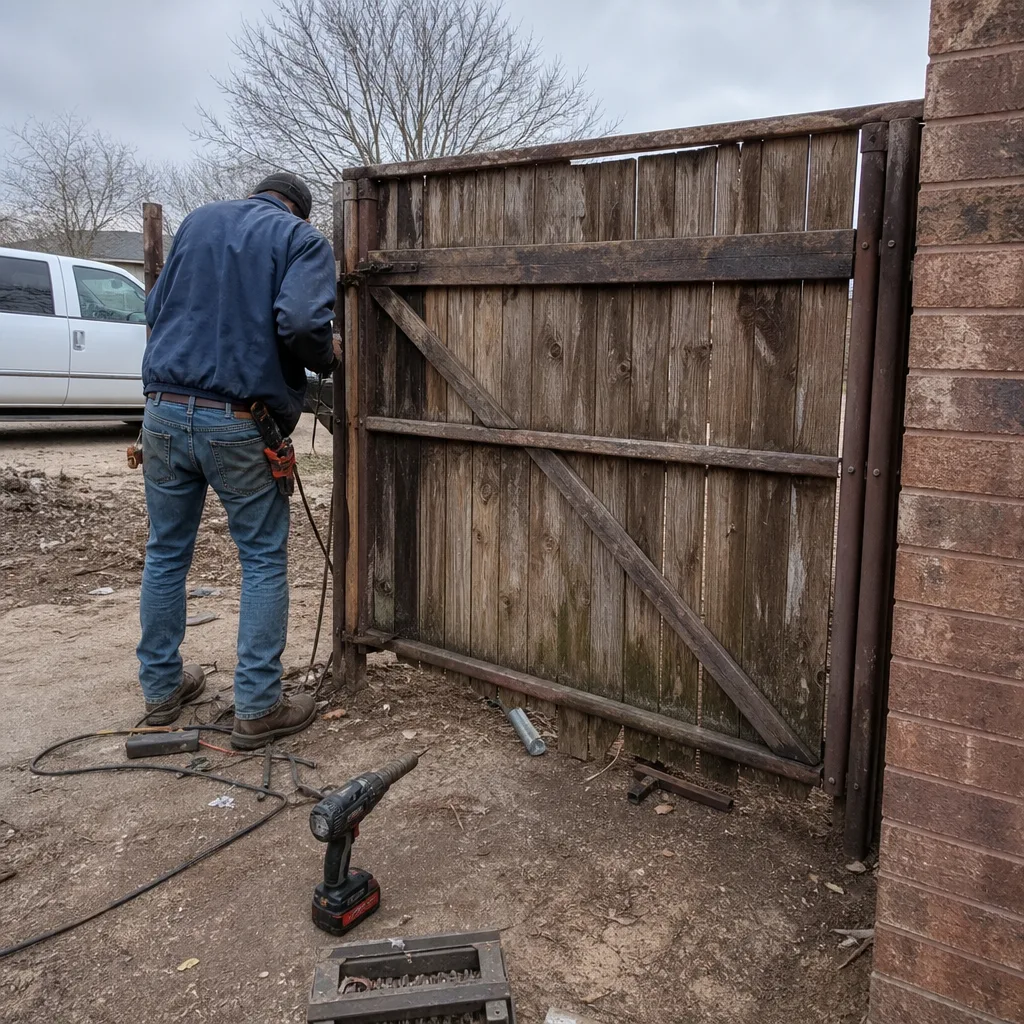 Before
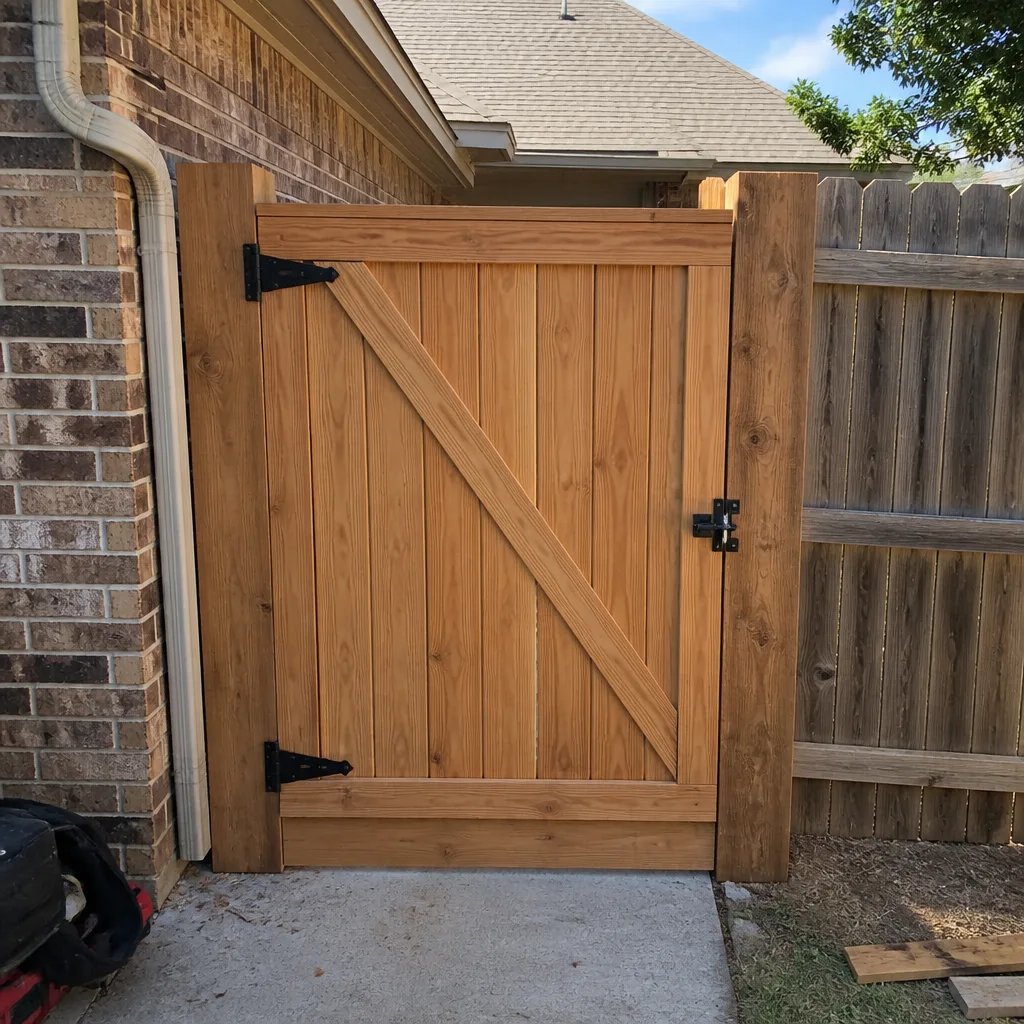 After
After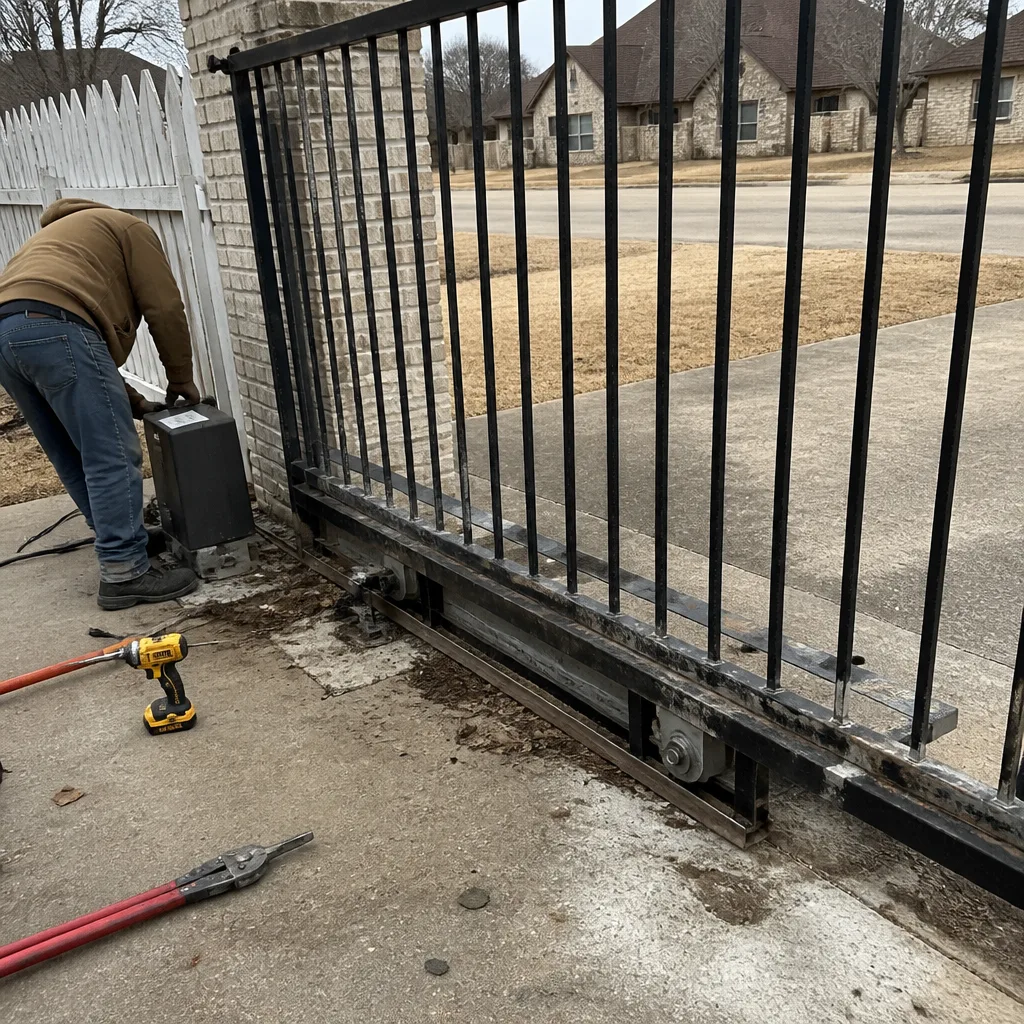 Before
 After
After Before
 After
AfterGate Repair Permits, Codes & Inspections in TX: What You Need to Know
Most Texas homeowners are surprised to learn that the gate on their driveway is governed by more pages of code than the fence beside it. The motor, the sensors, the swing radius, the emergency release mechanism - each falls under a different section of state and local regulation. This guide explains what actually applies to your property in Burleson, what you can handle yourself, and what requires a permit and a licensed eye before you touch a wrench. By the end, you’ll know exactly how to avoid the three most expensive mistakes we see on gate projects across Johnson County.
Quick Answer
Most gate repairs in Texas - hinges, welds, wheels, and opener replacements - do not require a permit. A permit is typically required only when you are installing a new gate or automation system from scratch, moving a gate in a way that changes its footprint, or running new electrical. Inspections, when they happen, focus on safety edges, entrapment protection, and compliance with UL 325 and the Texas Accessibility Standards. When in doubt, the city of Burleson’s building department will tell you in five minutes whether your project needs paper.
Table of Contents
- Do I Need a Permit to Repair a Gate in Texas?
- When a Permit Is Actually Required in Burleson
- UL 325 and Entrapment Protection: The Code That Governs Every Automatic Gate
- Electrical Code for Gate Operators: What the Inspector Looks For
- HOA Rules and Deed Restrictions in Burleson
- The Gate Inspection Process: Step by Step in Johnson County
- How Texas Heat and Clay Soil Affect Gate Codes and Longevity
- Common Mistakes to Avoid
- When to Call a Professional
- Frequently Asked Questions
- The Bottom Line
Do I Need a Permit to Repair a Gate in Texas?
No permit is required for the vast majority of gate repairs in Texas. Replacing a broken hinge, straightening a sagging post, welding a cracked rail, or installing a new opener on an existing gate are all considered maintenance, not construction. We have completed thousands of these jobs in Burleson over the years, and the city has never once asked one of our customers for a permit on a hinge replacement. The state’s logic is simple: if the work restores the gate to its original function and does not change its location or add a new electrical load, it is a repair, not an improvement.
The line blurs when you add power. A gate that has never been automated is a different animal from a gate that already has an operator. In Burleson, adding a brand-new automatic opener to a previously manual gate often triggers the requirement for an electrical permit, because new power is being run to a new location. Even then, the permit is for the electrical work, not the gate itself. The gate hardware - the steel, the hinges, the track - does not require a structural permit in any city we serve across North Texas.
Here is a practical breakdown of common jobs and their permit status in Burleson:
- Hinge replacement on an existing gate: No permit.
- Weld repair on a cracked frame or post: No permit.
- Opener replacement on an existing automated gate: No permit in most cases, unless the new opener changes the electrical load significantly.
- Adding an opener to a manual gate for the first time: Electrical permit usually required.
- Building a new driveway gate from scratch: Permit often required, plus HOA approval if applicable.
When a Permit Is Actually Required in Burleson
Burleson follows the International Residential Code with local amendments, and the city’s building department is genuinely easy to work with. A phone call to their office at City Hall usually resolves any question in under ten minutes. That said, there are five situations where you should expect to pull a permit before gate work begins.
1. New electrical service to a gate. Running a dedicated circuit from your panel to a gate location that has never had power is electrical work under Texas law. This requires a permit and a licensed electrician to sign off on the rough-in before the trench is closed.
2. A new gate structure that exceeds seven feet in height. Most driveway gates fall under this, but some estate gates do not. If the gate is taller than seven feet, the city treats it as a structure and wants to review wind load and footing depth.
3. Any gate within a floodplain or drainage easement. A surprising number of homes in Burleson neighborhoods like Hidden Vistas and Mistletoe Hill back up to creeks and drainage channels. If your planned gate sits within a floodplain boundary, the city requires a permit to ensure the gate does not obstruct water flow.
4. Gates on corner lots where sight lines matter. Burleson code restricts how tall and how solid a gate can be within the sight triangle of an intersection. If your driveway exits onto a street corner, the city will want to review the gate’s setback and height.
5. Commercial gates and access control systems. Any gate serving a business, school, or multi-tenant property falls under different rules entirely. These require permitted plans, inspected electrical, and sometimes annual safety certification.
UL 325 and Entrapment Protection: The Code That Governs Every Automatic Gate
Every automatic gate in Texas - including every gate in Burleson - is governed by UL 325, the national safety standard for gate operators. Passed after a series of tragic accidents involving entrapment, this standard requires that every automated gate include at least two independent means of entrapment protection. This is not optional, it is not a local preference, and it is not something a handyman is likely to mention. The code applies equally to a $40,000 estate gate in Mira Vista and a $1,800 chain-drive opener on a mobile home lot.
The two required protections are:
- A monitored entrapment sensor - such as photoelectric eyes across the gate opening, or a contact edge on the leading gate edge that reverses the gate when touched.
- An inherent reversing mechanism - the motor itself must sense resistance and reverse direction if it encounters an obstruction that prevents closure.
Any gate operator manufactured after 2001 that is installed in the United States must comply with UL 325. That includes every opener we service: Ghost Controls, DoorKing, Elite, Mighty Mule, and the other five brands we carry parts for. An operator that does not meet UL 325 cannot be legally installed as a new unit. An operator that meets the standard but has been installed without its safety edges or photo eyes is a code violation waiting to become a liability.
In practical terms for a Burleson homeowner, here is what UL 325 means at your driveway:
- Your gate must reverse when it meets resistance - a person, a dog, a trash can.
- Your gate must have a second, independent sensor that detects an obstruction before the gate touches it.
- Your gate’s emergency release - the red handle or pull cord that disengages the motor - must be accessible from the outside of the gate and must not require a key.
- Your gate’s controls, especially the wireless receiver, must be set so the gate cannot be operated by a passing car or a stray signal from a neighbor’s remote.
- Your gate must not close on a vehicle’s undercarriage when the vehicle is parked under the swing path.
Electrical Code for Gate Operators: What the Inspector Looks For
When a Burleson inspector comes out to look at gate electrical work, they are checking for the same things an inspector in Fort Worth or Arlington checks for. The National Electrical Code governs the wiring, and the process is straightforward if you know what they want to see.
Here is what gets inspected on a typical gate operator installation in Johnson County:
- Proper grounding. The gate operator must be grounded to a dedicated ground rod or, in some installations, bonded to the home’s grounding electrode system. Burleson inspectors are particular about this, and so are we. A gate motor that is not grounded correctly can fry its control board during a lightning storm - something we see every spring in Texas.
- GFCI protection on the branch circuit. Any circuit feeding a gate operator must be GFCI-protected at the source. This protects the motor and anyone touching the gate during a rainstorm.
- Correct wire gauge and burial depth. Burleson requires direct-burial rated wire at a depth of at least 18 inches when crossing a lawn or garden bed, and 24 inches when crossing a driveway or any area subject to vehicle traffic. Wire that is not rated for direct burial must be run in conduit.
- Disconnect means within sight of the gate. The inspector wants to see a clearly marked disconnect switch or lockable breaker within sight of the operator. This is a safety issue: a technician working on the gate must be able to cut power without walking back to the house panel.
- Low-voltage wiring separated from line voltage. The 12V or 24V wires that feed your keypad, photo eyes, and safety edges must be run separately from the 120V line that powers the motor. Buried in the same conduit is a code violation.
We have fixed enough botched electrical work in Burleson to say this plainly: an ungrounded gate opener is the single most common reason a three-year-old operator dies suddenly. The second most common is wire that was not rated for direct burial and rotted through. Both are entirely preventable with a proper install and a permit inspection.
HOA Rules and Deed Restrictions in Burleson
A gate permit from the city is one thing. HOA approval is another, and in Burleson the HOA is often the stricter of the two. Many of the neighborhoods where we work - Hidden Creek, Oak Valley, Alsbury, and the older sections along Renfro Street - have active HOAs with published architectural guidelines. Even when the city does not require a permit for a gate repair, the HOA may require written approval before any work begins.
The rules vary by neighborhood, but these are the restrictions we encounter most often:
- Gate height and opacity: Some HOAs cap driveway gates at six feet and require them to be at least 50% open - meaning wrought iron pickets, not solid panels. A solid wood or steel panel gate may be a violation even if the city says it is fine.
- Color and finish: Several Burleson HOAs require all metal gates to be black powder coat or a specific approved finish. We recommend checking before you order a custom gate in any other color.
- Style consistency: If your HOA reviews gate plans, they will want the gate to match or complement the home’s existing architectural style. A modern horizontal-plank gate in a neighborhood of traditional brick homes is a common point of rejection.
- Setback from the street: Most HOAs in Burleson require the gate to be set back a minimum distance from the curb so a car can pull off the street while the gate opens. A gate built right at the property line is often a violation.
- Automated gates and noise: A few HOAs restrict the type of operator allowed, specifically banning noisy older models. Replacing an old unit with a quiet belt-drive opener from LiftMaster or an Elite unit usually satisfies the board.
The safest approach in any HOA community is to request the architectural review committee’s written approval before you buy hardware. We tell every customer in a deed-restricted Burleson neighborhood the same thing: get it in writing, keep it in a folder, and do not assume a verbal approval from a board member will hold up.
The Gate Inspection Process: Step by Step in Johnson County
If your gate project in Burleson does require a permit, here is how the inspection process actually unfolds. It is simpler than most people expect, and the city has been straightforward with us on every job we have permitted.
Step 1: Apply for the permit. For most residential gate jobs, this means filling out a one-page application with the City of Burleson Building Services, either online through their portal or in person at City Hall. You will describe the scope of work, list the contractor’s name (or homeowner’s name if DIY), and pay a fee that is typically under $100 for a residential electrical permit.
Step 2: Rough-in inspection for electrical work. If new wire is being run, the inspector comes out after the trench is dug and the wire is laid but before it is covered. They check wire gauge, burial depth, conduit where required, and the placement of any junction boxes. This inspection takes about fifteen minutes.
Step 3: Gate installation. Once the rough-in passes, the gate hardware and operator go in. Nothing special happens here from the inspector’s perspective - the work proceeds normally.
Step 4: Final inspection. The inspector returns to verify the completed installation. They will operate the gate several times, check that the safety edges and photo eyes work, confirm the emergency release is accessible, and test that the gate reverses on contact. They will also verify the disconnect switch is present and properly labeled.
Step 5: Close out the permit. Once the final inspection passes, the permit is closed. Keep the permit number and any inspection reports with your home records. If you sell the house in Burleson, the buyer’s inspector may ask whether the gate was permitted, and having the paper is the difference between a smooth close and a last-minute negotiation.
How Texas Heat and Clay Soil Affect Gate Codes and Longevity
Burleson sits on expansive clay soil - the same black gumbo that heaves foundations across North Texas. This matters for gates more than most people realize. A gate that was perfectly level in March can be dragging the ground by August, not because anything was built wrong, but because the soil under the post expanded or contracted with moisture. The city’s code requirements for post depth - typically 36 to 42 inches for a driveway gate post, below the frost line - exist in part to anchor posts in soil that moves. In our experience, a post set at 18 inches in Burleson clay will fail within five years. A post set at 40 inches and properly concreted will hold for decades.
The heat is a different challenge. Summer temperatures in Johnson County routinely pass 100 degrees, and a black metal gate in direct sun can reach 140 degrees on its surface. This affects the electronics inside the operator box - control boards run hot, capacitors age faster, and solar operators perform below their rating. It also affects the gate itself: a long, unsupported gate leaf will sag more in Texas heat than in a cooler climate because the metal expands and the joints flex. The sag is not a code violation, but it is a safety issue: a sagging gate that drags on the ground will eventually bind and stress the opener motor until something breaks.
There are also wind considerations. Burleson sits in a zone where the code expects occasional straight-line winds over 70 miles per hour - the kind of wind that comes with spring thunderstorms and the occasional tornadic storm passing through Johnson County. A solid-panel gate has much higher wind load than a picket gate. If your HOA allows solid panels, you may need heavier posts and a stronger operator, and the city may want an engineer’s letter for a very large gate. We have seen a 16-foot solid cedar gate fold its post in a storm that a picket gate of the same width rode out without damage.
Common Mistakes to Avoid
- Assuming a repair never needs a permit. Most repairs do not, but adding power to a manual gate almost always does. We have seen homeowners buy a new opener, dig a trench, run wire, and then discover the city wants to inspect before the trench is closed. Dig once, ask first.
- Ignoring the HOA when the city gives the green light. The city of Burleson does not enforce HOA covenants. A gate that passes city inspection can still draw a violation letter from a Burleson HOA. Check both before you build.
- Skipping the safety edges on an automated gate. UL 325 requires two forms of entrapment protection. An opener installed without at least one contact edge or photo eyes is a code violation and a real danger to children and pets.
- Setting posts at 24 inches because it “looks deep enough.” In Burleson clay, that post will move. The code calls for three feet or more for a reason. Short-setting posts is the most expensive shortcut on a gate project because it fails slowly, after the gate is built and the operator is installed.
- Burying wire at six inches because it is a low-voltage system. Low-voltage wire still needs to be buried at proper depth or run in conduit. Splices that are not in waterproof junction boxes will corrode and fail within two or three Texas summers.
- Buying a gate opener online without checking UL 325 compliance. Some imported units sold online do not carry a UL 325 listing. A non-listed operator cannot be legally installed in Texas, and no reputable contractor will install it. If the price seems too good, the listing is usually the first thing missing.
- Skipping the permit to save the fee. The $50 to $100 permit fee is the cheapest insurance you will ever buy on a gate project. It means a second set of eyes on the electrical work and a paper trail when you sell the home.
When to Call a Professional
Some gate work is genuinely DIY-friendly: lubricating hinges, adjusting a latch, tightening bolts, replacing a keypad battery. But anything involving the operator motor, the high-tension springs that counterbalance most heavy gates, or the safety sensors deserves a trained hand. The springs on a driveway gate store enormous energy, and a spring that releases under tension can do serious harm. We do not recommend anyone without specific experience attempt a spring replacement or a cable rewind on a gate. The same caution applies to low-voltage troubleshooting: a gate that opens but will not close, or that reverses for no reason, is usually trying to tell you something about a sensor fault, and the diagnostic process is faster with a technician who has seen it before. Ironworks Gate Co. offers free estimates in Burleson - call (469) 564-8046, and we will come look at your gate and tell you honestly whether it is a job for you or a job for us.
Frequently Asked Questions
No permit is needed for repairs to existing gates in Burleson - hinges, welds, wheel replacements, and opener swaps are all classified as maintenance. A permit is only triggered when you add new electrical service, change the gate’s footprint, or build a new gate structure. Call the city’s building services line and describe the job; they will confirm in minutes.
A residential gate-related permit in Burleson typically costs between $50 and $120, depending on whether it covers only electrical work or also includes a structure review. The fee is a small fraction of the total project cost, and skipping it can cost far more if an unpermitted installation is flagged during a later home sale. For an exact quote on your specific project, call (469) 564-8046 and we will walk you through the process.
UL 325 is the national safety standard that governs all automatic gate operators in the United States, requiring at least two independent forms of entrapment protection - typically a reversing mechanism in the motor plus either a contact edge or photo eyes. Any new operator installed in Texas must carry a UL 325 listing. Operators without it cannot be legally installed, and any automated gate without functioning entrapment protection is a code violation.
Yes, a homeowner may install a gate opener themselves if the gate already has power and the operator is UL 325 listed. The work still must comply with the National Electrical Code, and if new wire is being run from the panel to the gate, a permit and inspection are required. If you install a Mighty Mule or Ghost Controls unit yourself, test the entrapment protection thoroughly before letting children or pets near the gate.
A Burleson gate inspector checks grounding, GFCI protection on the circuit, wire burial depth, the presence of a disconnect switch within sight of the operator, and the function of all entrapment protection devices. They will operate the gate several times, test the reversing function, and verify the emergency release is accessible from outside the gate. The inspection typically takes fifteen to twenty minutes.
Burleson HOAs often set stricter rules than the city on gate height, color, style, and setback from the street. The city may approve a seven-foot gate with no problem, while an HOA in Hidden Creek or Oak Valley may cap height at six feet and require a specific finish. Always request written approval from your HOA’s architectural committee before ordering gate materials. Call (469) 564-8046 if you need help navigating the paperwork.
The Bottom Line
Most gate repairs in Texas need no permit at all, and the ones that do are simple to handle if you ask before you dig. The two things that actually matter are compliance with UL 325 - because entrapment protection is a safety matter, not a paperwork matter - and doing the job right the first time, because a gate that fails in Burleson clay or Texas heat will fail in ways that cost more to fix than the permit would have. If you are unsure where your project falls, call the city or call us. We have been working on Burleson gates for years, and we will tell you the truth either way.
Written by Victor Salinas, Owner at Ironworks Gate Co. home, serving Burleson since 2013.