
Last updated August 25, 2026
Free on-site gate assessment - hinges, posts, and your LiftMaster or Nice gate operator checked before anything is quoted
The assessment is free and the quote is the invoice.
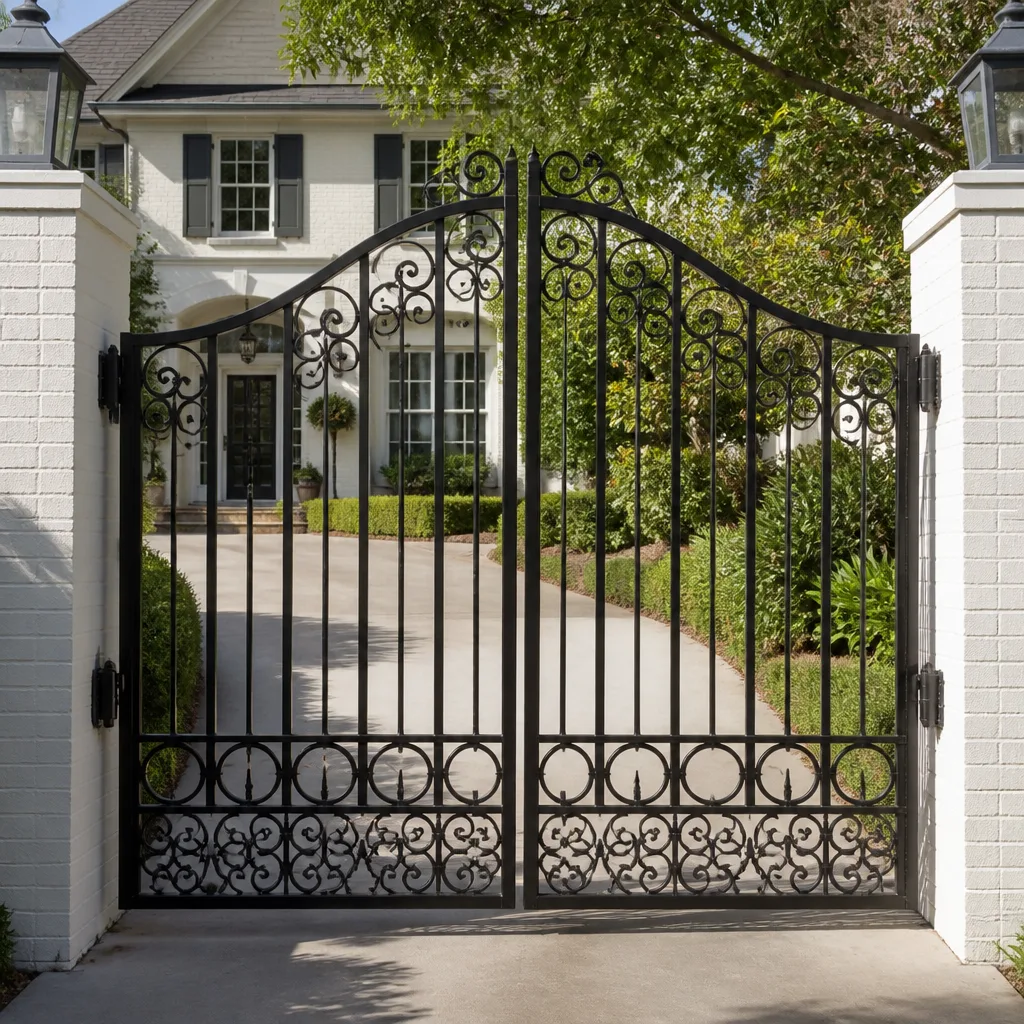
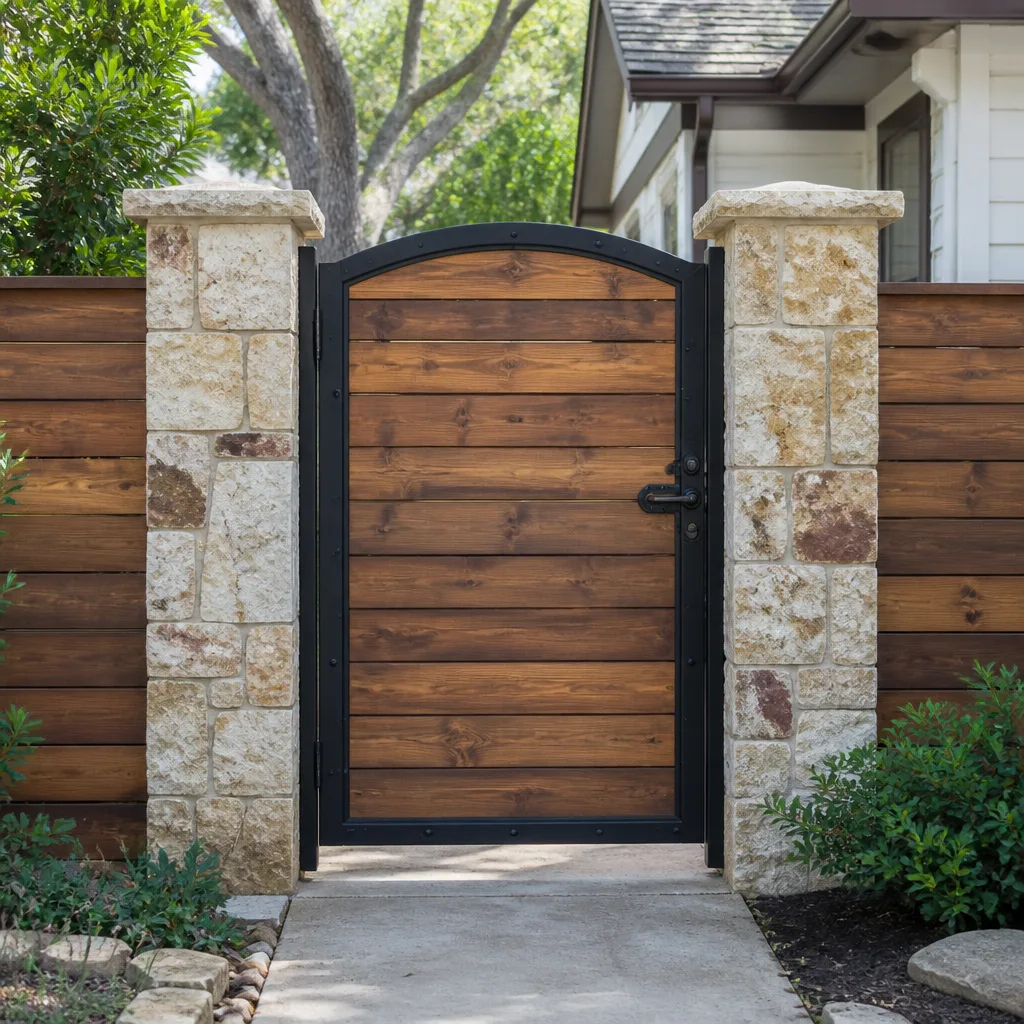
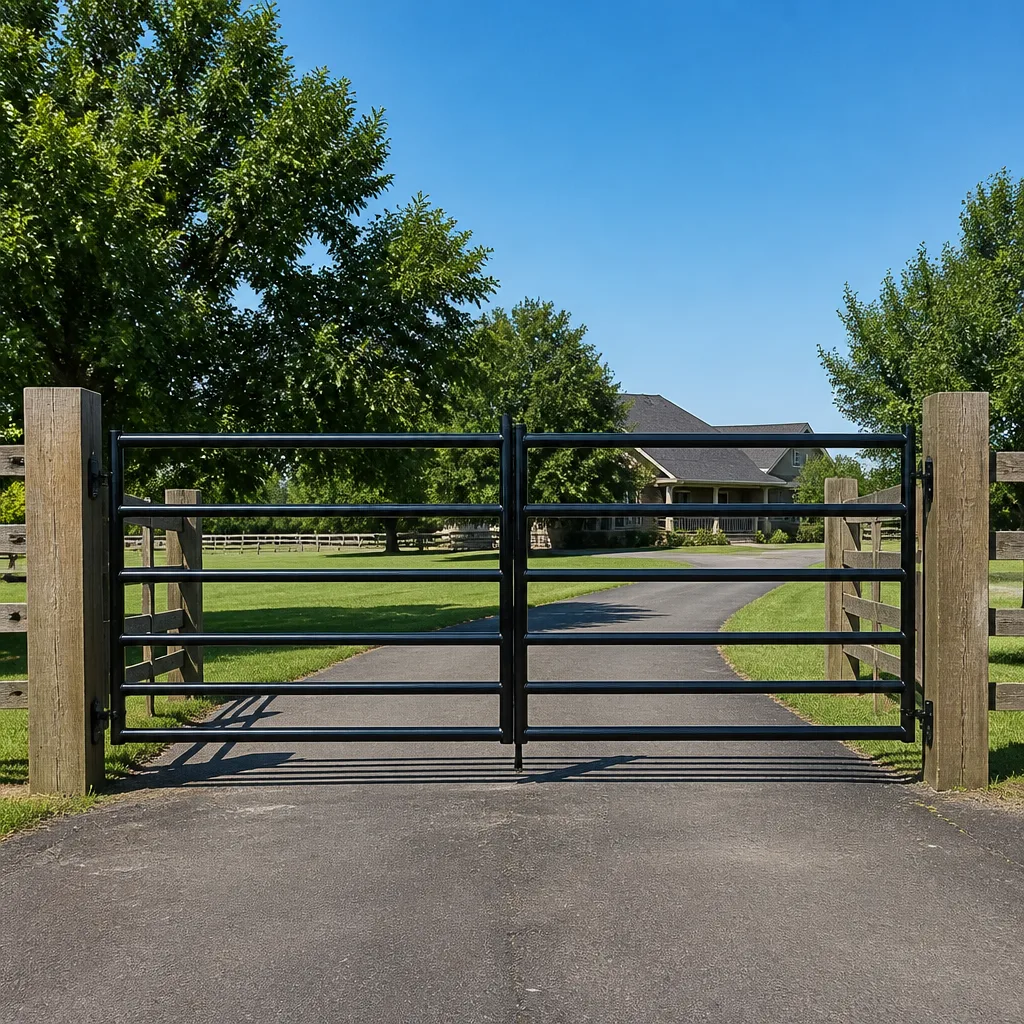
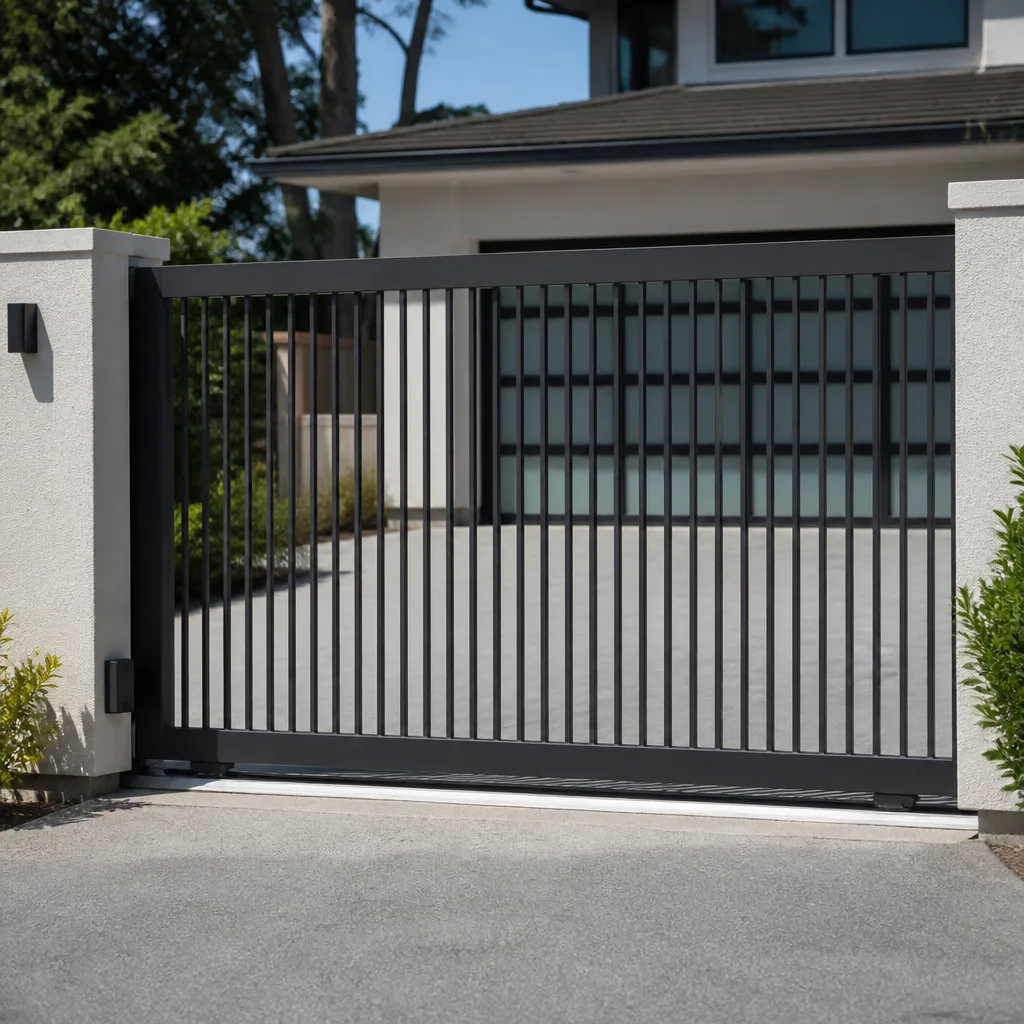
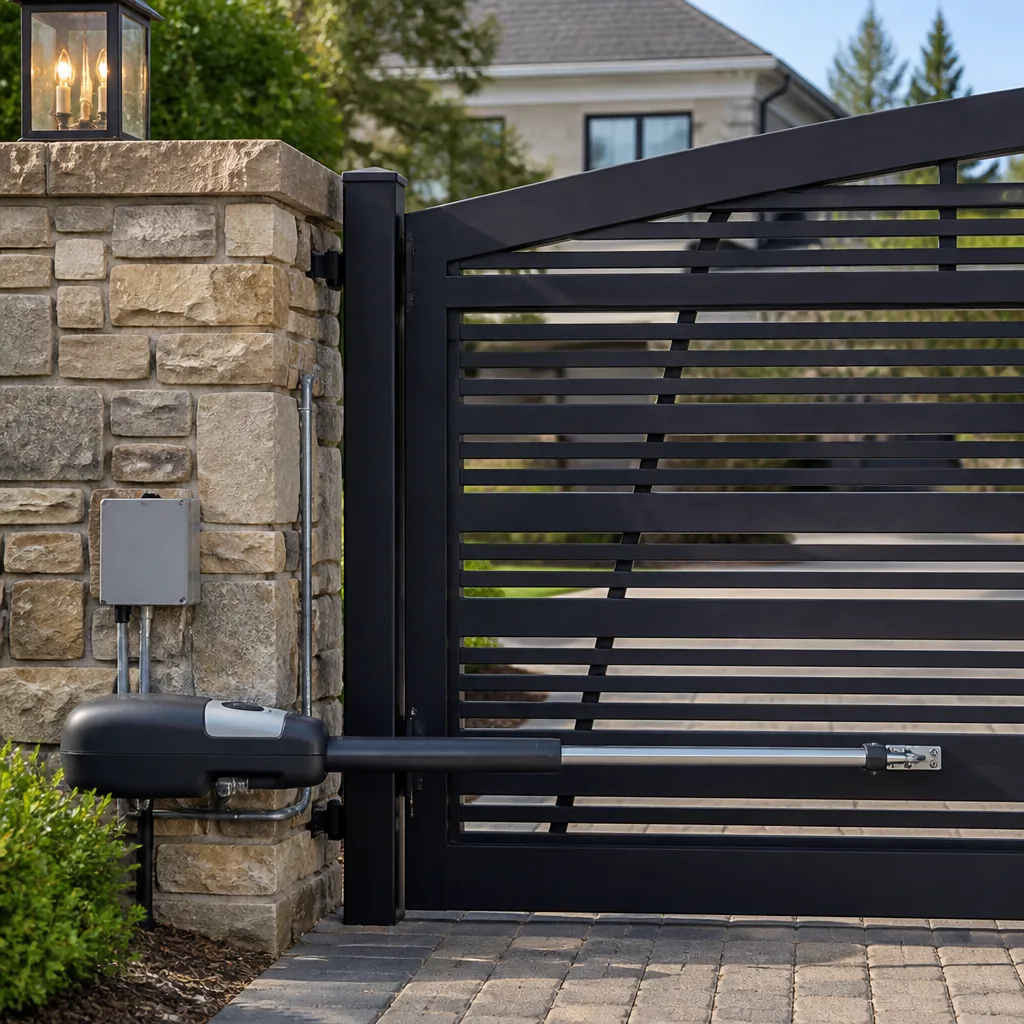
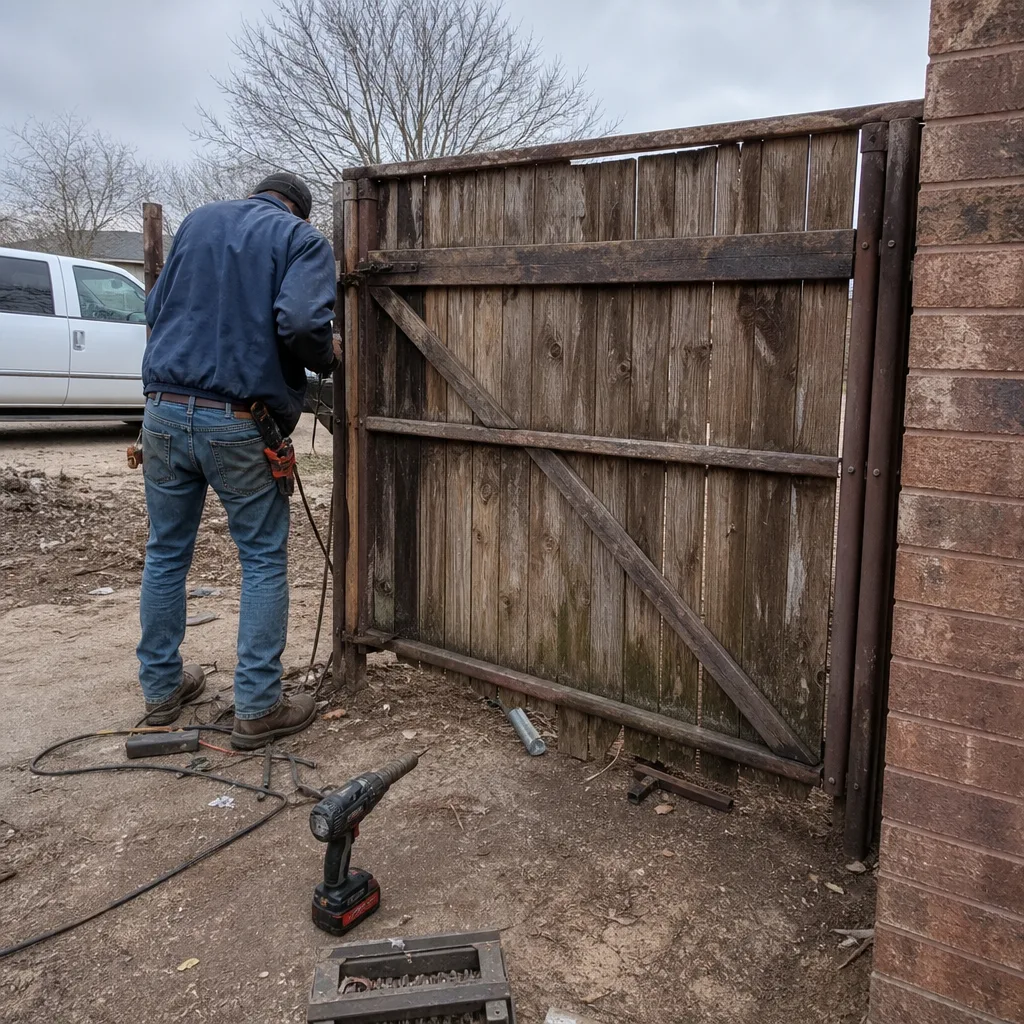 Before
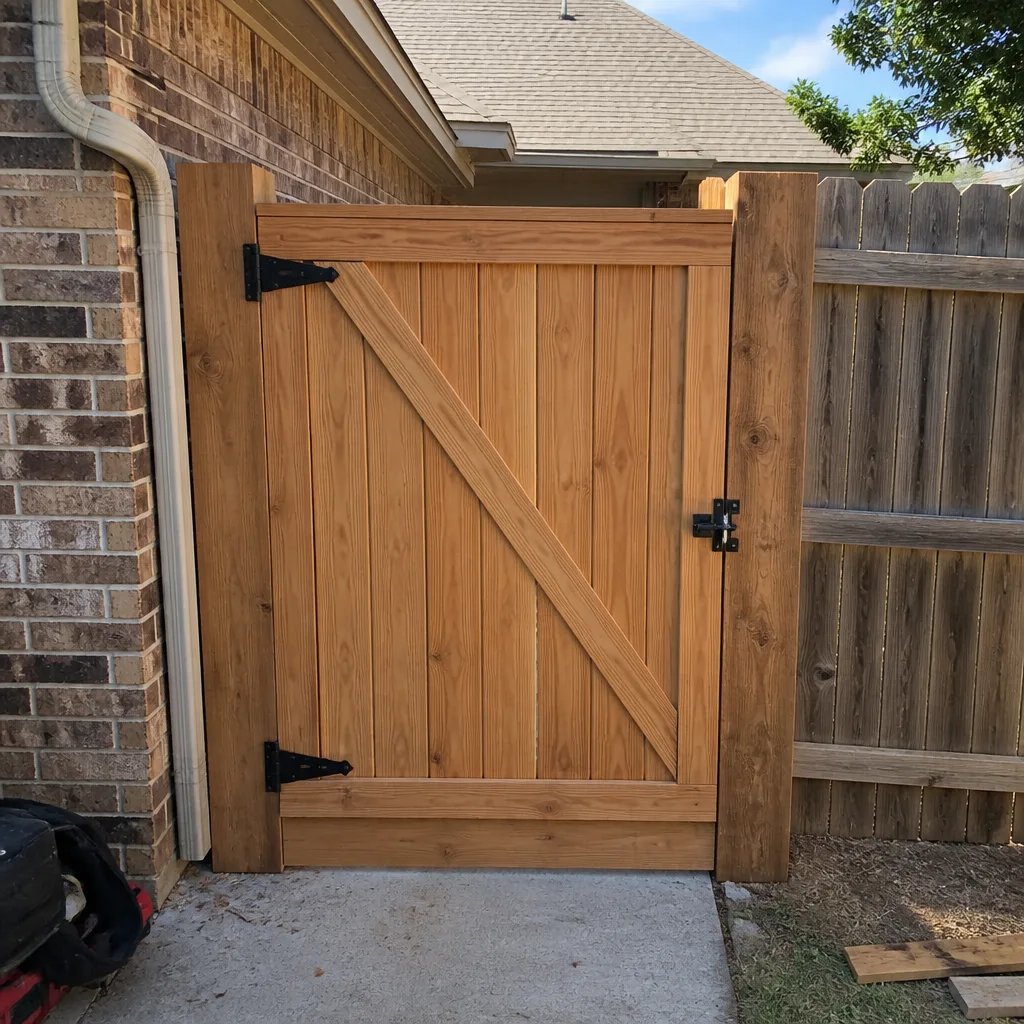 After
After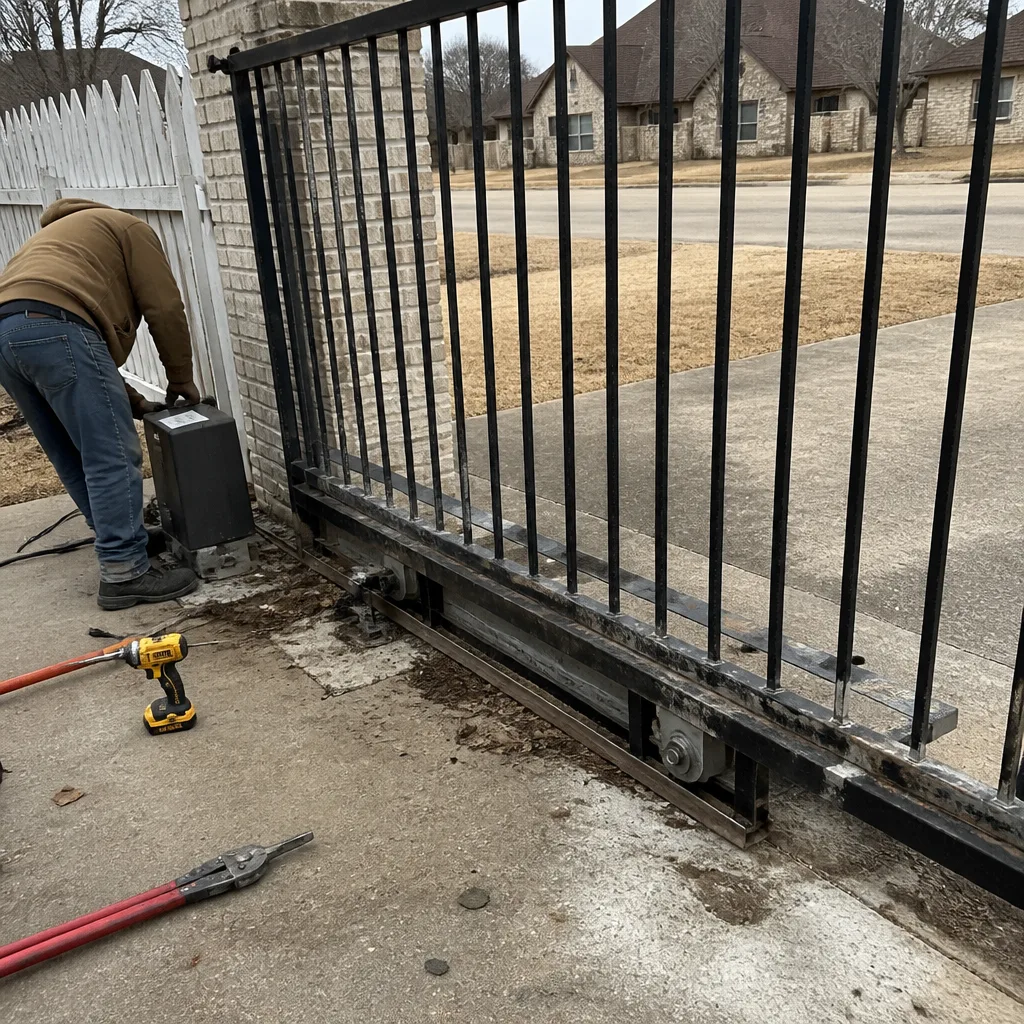 Before
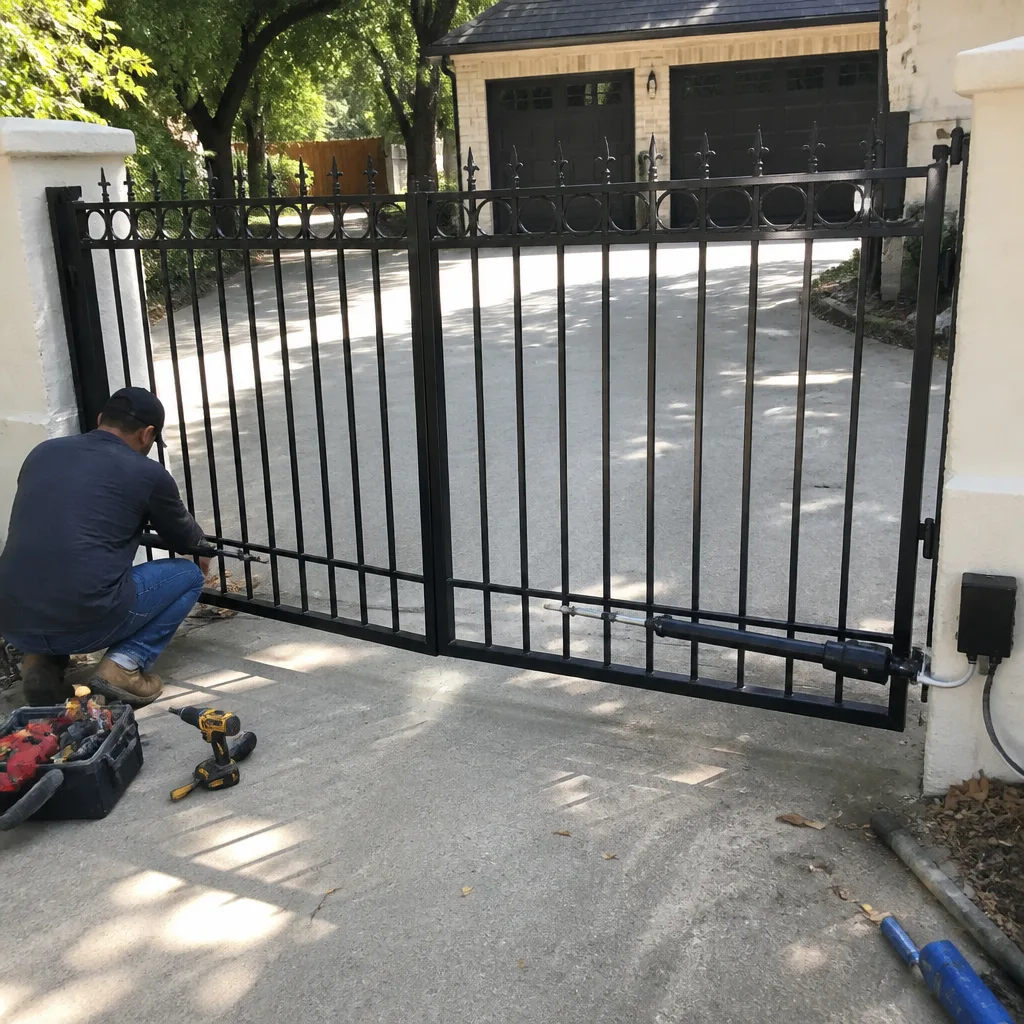 After
After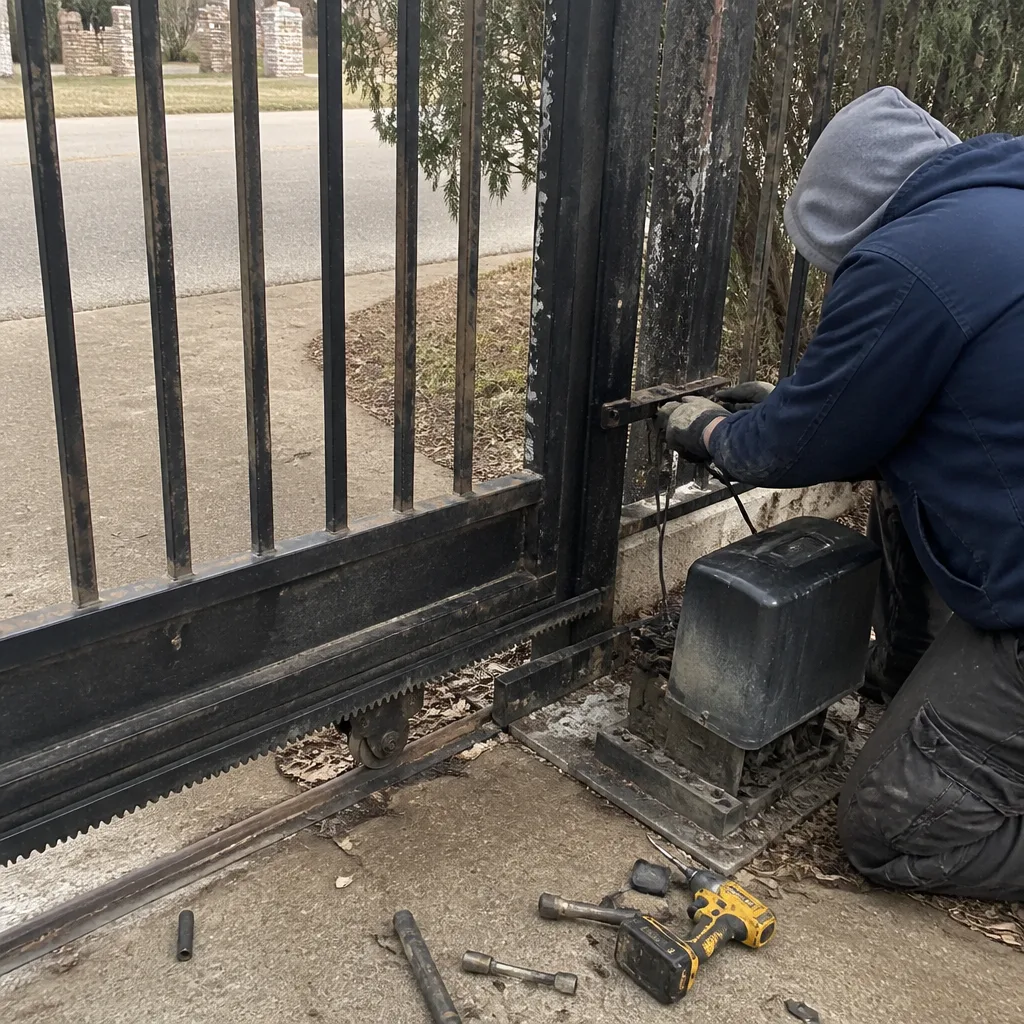 Before
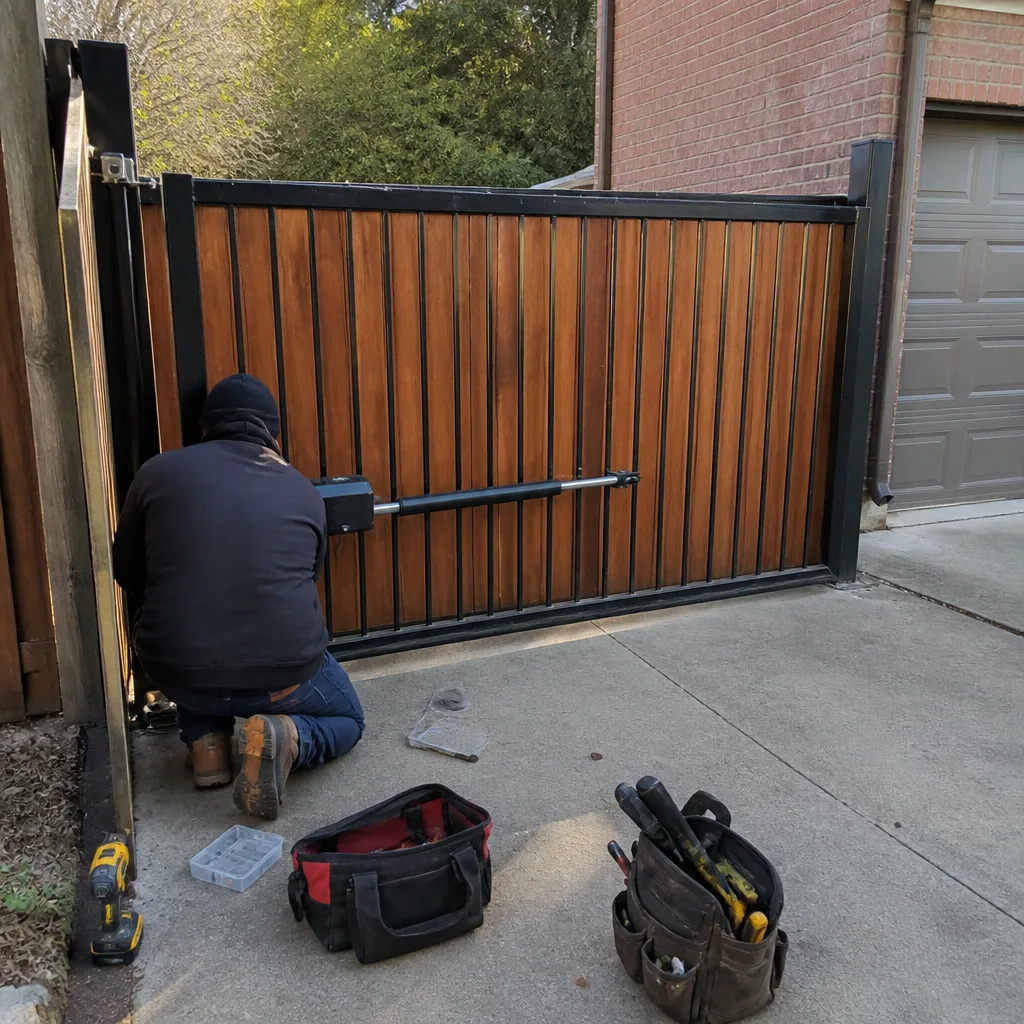 After
AfterDIY vs Professional Gate Repair: The Burleson Homeowner’s Decision Guide
Here’s a number most Burleson homeowners don’t expect: roughly six out of ten automatic gate failures we’re called to fix started as a do-it-yourself repair that went sideways. The homeowner saved $150 on the first attempt, then spent $600 undoing the damage. This guide walks you through what gate repairs are genuinely within reach for a capable homeowner, which ones turn dangerous or expensive fast, and how to tell the difference before you touch a wrench. If you live in Burleson, you’ll also learn what our local clay soil, summer heat, and storm patterns mean for your gate specifically.
Quick Answer
For most Burleson homeowners, simple maintenance like tightening hinge bolts, cleaning photo-eye sensors, and lubricating rollers is safe DIY territory. But anything involving torsion springs, welded joints, motor replacement, or circuit-board diagnostics is better left to a professional. A gate under tension can release stored energy instantly, and automation repairs done wrong often void the manufacturer’s warranty.
Table of Contents
- What You Can Safely Fix Yourself
- What Should Never Be a DIY Job
- The Real Cost Comparison: DIY vs Hiring a Pro
- How Burleson’s Climate Affects Your Gate
- When Welding Matters More Than Bolts
- Automation Brands and Why They Matter for Repairs
- Safety First: What Burleson Code and Common Sense Require
- How to Choose a Gate Repair Company in Burleson
What You Can Safely Fix Yourself
We’re not going to tell you every gate issue requires a service call. That wouldn’t be honest, and it wouldn’t be how we’ve done business in Burleson for over four decades. Some tasks are genuinely simple, and doing them yourself keeps your gate running between professional tune-ups. Here’s what falls into the reasonable DIY category for most homeowners:
- Lubricating hinges and rollers. A can of white lithium grease or silicone spray applied to hinge pins and roller bearings once or twice a year makes a measurable difference in how smoothly your gate moves. This is the single highest-value maintenance task you can do yourself.
- Cleaning photo-eye sensors. Burleson’s dusty summers leave a film on safety sensors. A soft cloth and glass cleaner usually clears the obstruction and gets your gate closing again.
- Tightening visible bolts and hardware. Gates vibrate with every cycle. Over time, bolts back out. A socket set and fifteen minutes can quiet a rattling gate.
- Clearing track debris. For sliding gates, leaves, gravel, and our famous Texas clay build up in the track. A stiff brush and a shop vacuum prevent most track-related failures.
- Checking battery backups. Many opener models have a backup battery that needs replacing every two to three years. If you can read the label and swap a battery, this is a homeowner’s job.
These tasks share three things in common: they’re low-risk, they don’t require specialized tools, and if you make a mistake, the fix is simple. They also extend the life of your gate meaningfully. In our experience, the difference between a gate that lasts 15 years and one that lasts 25 in Burleson comes down to whether these basic items got done.
What Should Never Be a DIY Job
Now the other side. Some repairs carry real risk or require tools and knowledge that most homeowners simply don’t have. We’ll be direct about this because we’ve seen the results when someone tries anyway.
- Torsion spring replacement or adjustment. A torsion spring on a gate can store hundreds of pounds of torque. If it lets go while you’re working on it, the injury is serious. This is not a job for a YouTube tutorial.
- Welding repairs. Cracked welds on a gate frame need proper surface prep, correct amperage settings, and knowledge of how the gate was originally built. A poor weld looks fine for about six months, then fails again, usually at night or during a storm.
- Motor or gearbox replacement. Gate motors from brands like Ghost Controls, DoorKing, and LiftMaster have specific torque ratings matched to your gate’s weight and length. Installing the wrong motor or mismounting it means a gate that binds, overheats, and dies young.
- Circuit board diagnostics. Modern gate openers are small computers. If the board is fried, the problem is usually caused by something upstream, like a bad power supply or a lightning strike. Replacing the board without finding the cause means you’ll replace it again.
- Safety sensor and loop detector wiring. Your gate’s safety systems prevent it from closing on a car, a child, or a pet. Wiring these incorrectly doesn’t just break the gate. It creates a genuine safety hazard on your own property.
- Gate track realignment. A sliding gate that drags or binds often has a track that’s shifted out of alignment. Fixing it properly requires lifting equipment and careful measurement. Improvising with pry bars usually makes it worse.
The pattern here: these jobs involve stored energy, structural integrity, or safety systems. The cost of getting them wrong far exceeds the cost of hiring someone who does this work every day.
The Real Cost Comparison: DIY vs Hiring a Pro
Let’s put numbers on this, because that’s what actually matters when you’re deciding. These figures reflect what we see across Burleson, from older neighborhoods off Renfro Street to newer developments south of Hidden Creek.
Typical DIY Costs vs Professional Repair in Burleson
- Photo-eye cleaning/realignment: DIY $0 (household supplies), professional $75-$125 service call. Verdict: DIY.
- Hinge lubrication and bolt tightening: DIY $15-$25 for supplies, professional $89-$150 for a seasonal tune-up that includes this plus more. Verdict: DIY if you’re diligent, professional tune-up once a year for thoroughness.
- Sensor replacement: DIY $40-$120 for the part, professional $150-$250 installed and tested. Verdict: DIY if you’re comfortable with basic wiring; professional if you want it guaranteed.
- Battery backup replacement: DIY $35-$80, professional $100-$180 including testing. Verdict: DIY.
- Hinge replacement on a heavy steel gate: DIY $50-$150 for hinges plus tools you may not own, professional $250-$450 including alignment. Verdict: Professional, because aligning a heavy gate solo is genuinely difficult.
- Torsion spring replacement: DIY $60-$120 for the spring plus a hospital bill if it goes wrong, professional $250-$500. Verdict: Professional, no question.
- Motor replacement: DIY $300-$600 for a unit that may not be right for your gate, professional $600-$1,200 including correct sizing, mounting, and calibration. Verdict: Professional.
- Full track replacement for a sliding gate: DIY $200-$500 in materials plus a weekend of frustration, professional $500-$1,000 done in a day. Verdict: Professional.
What these numbers don’t show is the second-visit cost. When a DIY repair fails, you pay for the parts you already bought, the time you already spent, and then the professional repair on top. That’s how a $150 savings becomes a $600 expense. We’ve seen this math play out enough times in Burleson that we can predict it with depressing accuracy.
One thing we want to be clear about, whether you hire us or anyone else: the price should be quoted and agreed before any work starts. That’s how we operate, and it’s the only honest way to run a service business. If a company won’t give you a firm number upfront, find another company.
How Burleson’s Climate Affects Your Gate
Your gate doesn’t live in a showroom. It lives in Burleson, and Burleson has specific conditions that shape what goes wrong and when. Understanding these patterns helps you anticipate repairs before they strand you.
The clay soil problem. Much of Burleson sits on expansive clay. When it rains, the soil swells. When the Texas summer bakes it dry, it shrinks and cracks. For a gate on posts, this means slow but constant movement. Posts shift, gates sag, and hinges bind. For a sliding gate on a track, soil movement can twist the track just enough to cause drag. Homeowners in neighborhoods off Wilshire Boulevard and down toward Joshua tell us about gates that worked fine for years, then started binding after a wet spring. The gate didn’t change. The ground under it did.
Summer heat and electronics. Burleson summers routinely hit triple digits. Gate opener control boards, capacitors, and motors all have operating temperature ranges, and our summers push past them. We replace more capacitors in July and August than in the other ten months combined. Heat plus a power surge is a common killer of circuit boards, which is why surge protection on your gate’s power line is genuinely worth the cost.
Spring storm season. North Texas storms bring wind that can catch a broad gate face and twist it, rain that floods track areas, and lightning that can toast opener electronics even when the gate itself is untouched. After a major storm passes through Burleson, we see a predictable spike in calls for gates that won’t open, won’t close, or sound like they’re grinding gravel. Many of these could have been prevented with a post-storm inspection.
Wind load on wide gates. If your driveway gate spans more than about 14 feet, wind becomes a structural concern, not just a convenience one. A broad gate without a proper frame design can flex permanently in a strong north wind, which throws off alignment and shortens the life of every moving part.
The point isn’t that Burleson’s climate is extreme compared to anywhere else in Texas. The point is that any gate repair you tackle should account for these local conditions. A generic internet fix that works in Arizona might not address what’s actually happening to your gate in Johnson County.
When Welding Matters More Than Bolts
Most homeowner repairs stop at the mechanical layer: bolts, hinges, sensors, maybe a motor. But iron gates, by their nature, are welded structures. When a weld cracks, no amount of bolt tightening fixes it. This is where the gap between DIY and professional widens beyond reach for most people.
A cracked weld is a structural failure. It usually happens at a stress point: where a hinge plate meets the gate frame, where a diagonal brace ties into a vertical stile, or where the opener arm attaches. These aren’t random places. They’re exactly where force concentrates every time the gate opens and closes.
Repairing a cracked weld properly requires several steps that are easy to get wrong:
- Surface preparation. The area around the crack must be ground clean down to bare metal. Paint, rust, and old weld material all contaminate the new weld and weaken it.
- Correct process. Depending on the metal and the location, the repair might need MIG welding, stick welding, or TIG welding. Using the wrong process produces a weld that looks acceptable but fails under repeated loading.
- Proper penetration. A surface weld that doesn’t penetrate the base metal is just decorative. The gate will crack again in the same spot, often within months.
- Reinforcement. A good weld repair often includes adding a gusset or plate to redistribute stress so the original failure point isn’t re-created.
- Post-weld finishing. Grinding, priming, and painting the repair so it doesn’t rust in Burleson’s humidity within a season.
We’ve repaired welds on gates in Burleson that were originally installed 30 years ago, and we’ve repaired welds on gates that were “fixed” by a handyman six months earlier. The difference is whether the repair addressed the actual stress path or just filled a visible gap. If you see a crack in your gate’s metal, don’t reach for the JB Weld. You’ll be looking at the same crack again by Christmas.
Automation Brands and Why They Matter for Repairs
Here’s something most homeowners don’t realize until they’re in the middle of a frustrating repair: gate openers are not interchangeable. The motor that powers a Ghost Controls opener is calibrated differently than the motor in a DoorKing or an Elite unit. The wiring harness is different. The limit switch behavior is different. The error codes mean different things.
We work on nine major gate automation brands. That breadth exists for a reason: Burleson driveways have every brand imaginable installed over the last 30 years, and each one has its own quirks. A technician who only knows one brand will misdiagnose another brand and sell you parts you don’t need.
For a DIY repair, brand matters because:
- Wiring colors are not standardized. Red on a Mighty Mule board doesn’t do what red on a DoorKing board does. Guess wrong and you can fry the board.
- Motor torque settings vary by brand and model. A replacement motor with the wrong torque rating either strips the gearbox or stalls under load.
- Diagnostic codes are brand-specific. A blinking light pattern on one opener means something completely different on another.
- Compatibility is narrow. You can’t generally put a Ghost Controls receiver on a DoorKing system and expect it to work. The ecosystem is proprietary.
None of this is to say you can’t read a manual and replace a simple part on your opener. But when the problem is intermittent, or the gate starts and stops randomly, or the opener trips its breaker, the diagnosis requires brand-specific knowledge and real test equipment. That’s when the $89 seasonal tune-up we offer starts looking like a bargain compared to replacing parts on guesswork.
Safety First: What Burleson Code and Common Sense Require
We need to talk about safety, because gates are genuinely dangerous machinery. A 400-pound steel gate swinging on a motor has enough force to seriously injure or kill a person or pet. That’s not scare language. That’s why safety features exist and why they must work correctly.
In Burleson, residential gate installations are subject to the same safety standards that apply across Texas. Your gate should have:
- Working photo-eye sensors that detect an obstruction and stop or reverse the gate.
- An auto-reverse mechanism that trips when the gate meets resistance during closing.
- Proper clearances that prevent pinch points where the gate passes near a post or fence.
- Entrapment protection on sliding gates, including screen mesh or other guarding where required.
If you’re doing a DIY repair and you disconnect or bypass a safety sensor, even temporarily, you’re creating a risk on your own property. If that gate injures someone, your homeowner’s insurance may not protect you if they find the safety system was defeated. That’s a financial risk no one plans for.
High-tension components like torsion springs and wound cables deserve special respect. These parts can release their stored energy in a fraction of a second. We strongly recommend that homeowners never attempt to replace or adjust torsion springs, cables under tension, or welded brackets that hold these components. The physics doesn’t care how careful you’re being.
How to Choose a Gate Repair Company in Burleson
Say you’ve decided to hire someone. The next question is who. Burleson has plenty of handymen who’ll “take a look” at a gate, and a few companies that do nothing but gates. Here’s how to tell the difference in the first five minutes of a conversation.
Ask what brands they service. If the answer is vague, like “all of them” with no specifics, that’s a red flag. A real gate company can name the brands: LiftMaster, FAAC, BFT, Linear, Viking, Ghost Controls, DoorKing, Elite, Mighty Mule. We carry parts and training for all nine.
Ask if the price is settled before work starts. This should be an easy yes. If you get hemming and hawing, or “it depends on what we find,” be cautious. A square deal means the number is on the table before the first bolt is turned.
Ask about the guarantee. Not just “is your work guaranteed” but “show me the guarantee.” We put ours in writing: a 90-Day Done Right Promise. If it isn’t right, we come back and make it right. No paperwork, no arguing, no exceptions. That’s the Keystone Standard on every job we complete, and it’s been that way since 1984.
Ask about who shows up. The person at your gate should be background-checked, uniformed, and trained specifically on gate systems, not a general handyman rotating through trades. Our technicians treat your home the way they’d treat their own mother’s, which is the standard we’ve held for over 42 years.
Call the number and see who answers. This is the simplest test. When you call us at (469) 564-8046, a live person picks up. Twenty-four hours a day, seven days a week. Not a voicemail tree, not an answering service, not a callback queue. If a company can’t answer the phone when you’re trying to give them money, what happens when you need them at 8 p.m. on a Sunday?
We know we’re not the only option in Burleson, and we don’t pretend to be. But we do know what 42 years of gate-specific work in this town looks like, and we’re happy to put our estimate next to anyone’s and let you compare. A Ironworks Gate Co. home page will give you the full picture of what we do and where we work.
Common Mistakes to Avoid
- Using the wrong lubricant. WD-40 is a solvent, not a long-term lubricant. It cleans, then evaporates, leaving your hinges dry. Use white lithium grease or a dry silicone spray on hinge pins and rollers.
- Ignoring a slow gate. A gate that moves slower than it used to is telling you something: motor strain, low voltage, dirt in the track, a failing capacitor. Waiting until it stops entirely means a bigger repair. In Burleson, a slow gate in June becomes a dead gate by August.
- Overtightening hinge bolts. Tight enough to eliminate play is right. Tighter than that binds the hinge and puts stress on the post. On a hot day, a slightly too-tight hinge on a dark-colored gate can seize as the metal expands.
- Disconnecting safety sensors to “fix” a gate that won’t close. The sensor is often doing its job. The problem is alignment, dirt, or a broken wire, not the sensor’s existence. Bypassing it removes the single most important safety feature on your gate.
- Buying the cheapest replacement motor online. A $300 no-name motor on a $6,000 gate is false economy. It won’t match your gate’s weight and duty cycle, it won’t communicate with your existing accessories, and it won’t last. We’ve replaced dozens of these in Burleson.
- Welding with a homeowner-grade flux core welder. Flux core can be great for farm repairs and thin sheet metal. For structural gate welds on steel post and frame members, you need proper penetration and the right filler material. If you can see porosity in your weld, you can see the future failure.
- Waiting to call until the gate is completely dead. A gate that’s noisy, uneven, or intermittent is cheaper to fix today than tomorrow. The most expensive repairs we do in Burleson are the ones a homeowner watched get worse for six months first.
When to Call a Professional
If your gate has a cracked weld, a sagging leaf, a torsion spring issue, a motor that hums but doesn’t move, or any electrical problem you can’t identify in five minutes with the manual, call someone who does this work every day. The same goes for any gate that’s become a safety concern: closing too fast, not reversing on contact, or missing safety sensors entirely. These are not weekend projects, and they carry consequences beyond inconvenience. Ironworks Gate Co. offers free estimates in Burleson, call (469) 564-8046 and you’ll get a live person, a straight answer, and a written price before any work begins.
Frequently Asked Questions
Most gate repairs in Burleson run between $150 and $600 depending on the issue, with simple fixes like sensor cleaning at the low end and motor replacement at the high end. The exact number depends on your gate’s size, brand, and what’s actually wrong, which is why we quote a firm price after inspection but before any work starts. Call (469) 564-8046 for a free estimate you can count on.
You can handle simple opener maintenance like cleaning photo-eye lenses, checking battery backups, and tightening loose terminal connections. Diagnosing and replacing control boards, motors, or damaged wiring is best left to a technician with brand-specific training, because a wrong guess can damage the new part and the existing system.
Burleson’s summer heat causes metal to expand and electronics to overheat, which makes gates bind, slow down, and trip thermal overloads on the motor. If this pattern sounds familiar, a seasonal tune-up before the heat hits in May or June is the cheapest prevention available. Call (469) 564-8046 to schedule our $89 Seasonal Tune-Up.
A well-built steel gate in Burleson should last 20 to 30 years with proper maintenance, while the opener typically needs replacement every 8 to 12 years. Our clay soil and summer heat shorten that lifespan if the gate was poorly installed or maintenance was skipped, which is why we recommend an annual professional check on both the mechanical and electrical sides.
We service nine major gate automation brands: LiftMaster, FAAC, BFT, Linear, Viking, Ghost Controls, DoorKing, Elite, and Mighty Mule. Whatever is on your driveway, there’s a strong chance we have the training, the parts, and the diagnostic experience to fix it right on the first visit.
Every gate repair or installation we complete in Burleson is protected by a written 90-Day Done Right Promise. If anything we fixed isn’t right, we come back and make it right, with no paperwork, no arguing, and no exceptions. That’s the Keystone Standard, and it’s been part of every job since 1984.
The Bottom Line
DIY gate repair has its place: lubrication, sensor cleaning, bolt tightening, and basic inspection are all within reach for most homeowners, and doing them regularly extends your gate’s life. But the line gets crossed fast when you touch welding, torsion springs, motor replacement, or electrical diagnostics. Those failures cost more to fix after a DIY attempt than they would have cost to repair correctly the first time. If you’re in Burleson and you’re not sure which side of the line your gate problem falls on, call us. A live person answers 24/7, the estimate is free, and the price is settled before we turn a single bolt. Done right, and backed in writing. That’s the only way we know how to work.
Written by Victor Salinas, Owner at Ironworks Gate Co., serving Burleson since 2013.