
Last updated August 25, 2026
Free on-site gate assessment - hinges, posts, and your LiftMaster or Nice gate operator checked before anything is quoted
The assessment is free and the quote is the invoice.
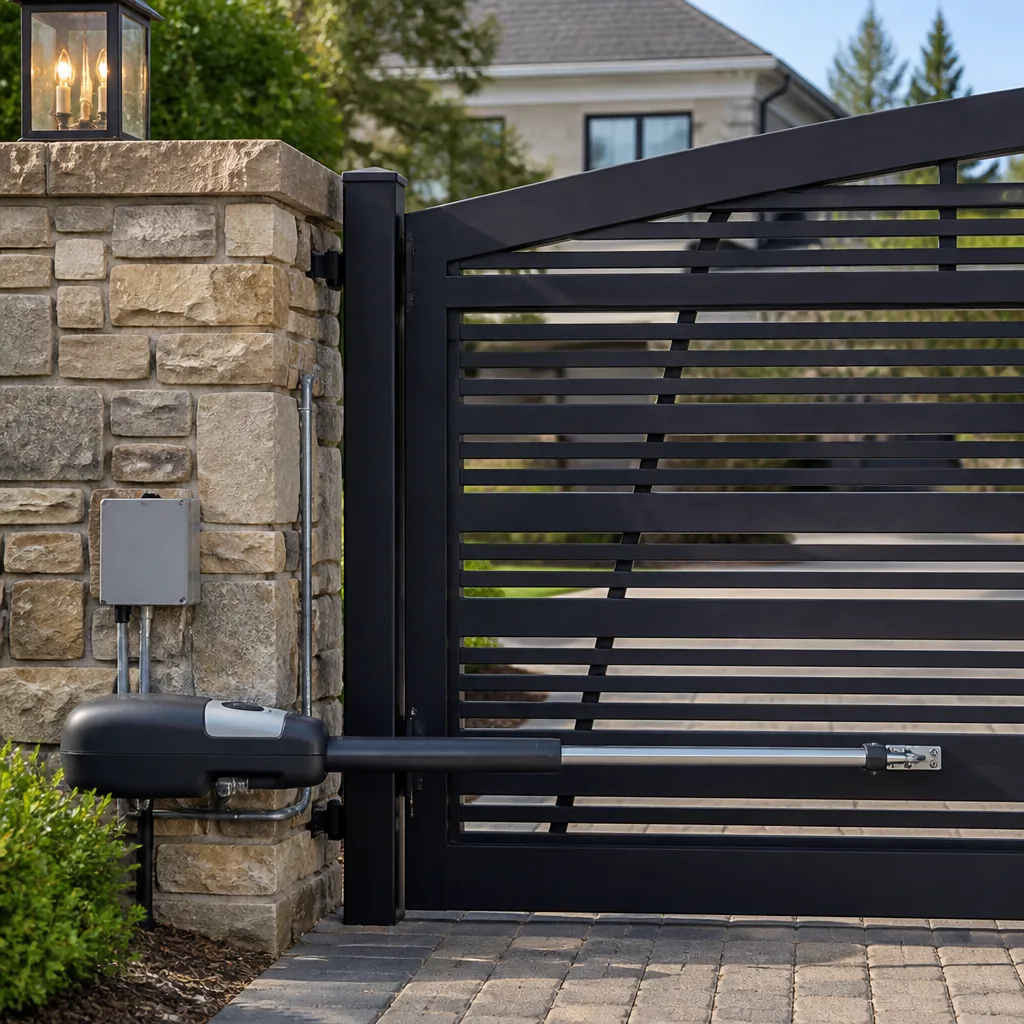
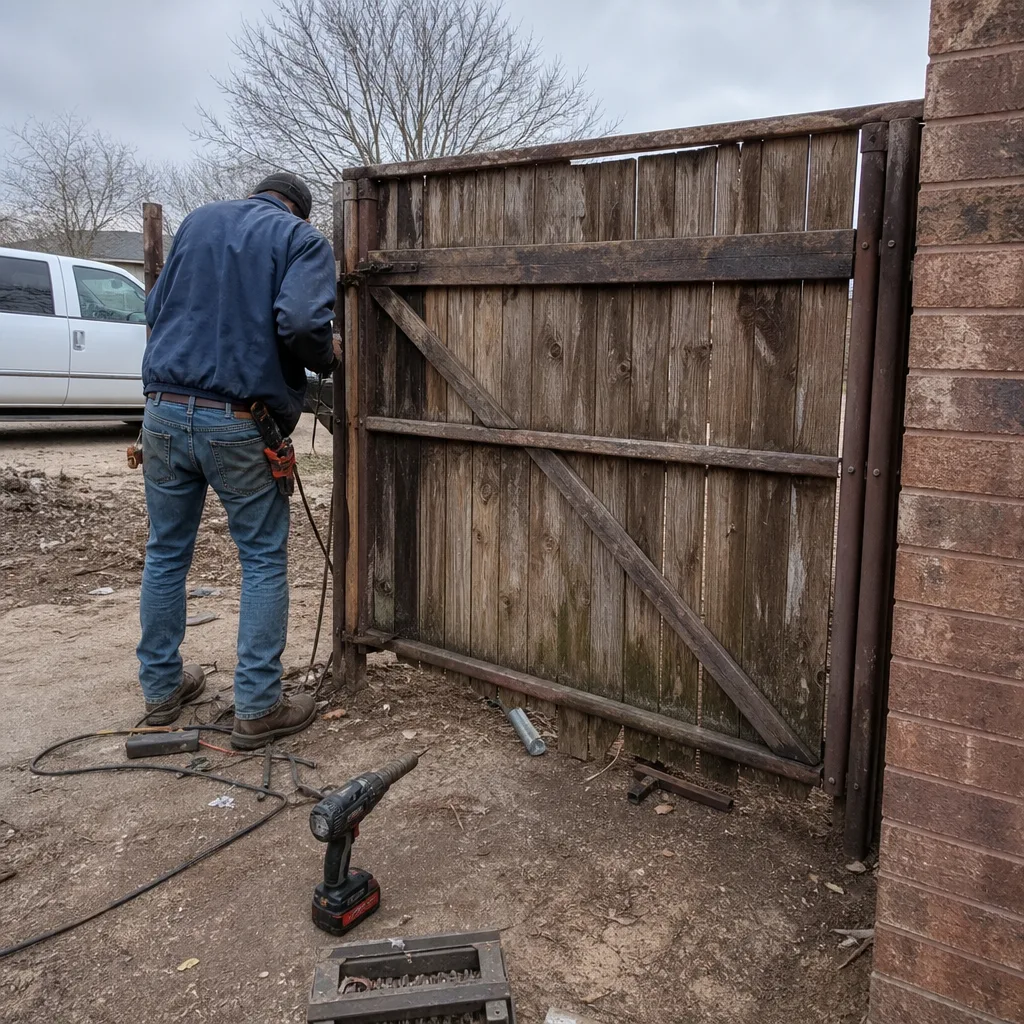 Before
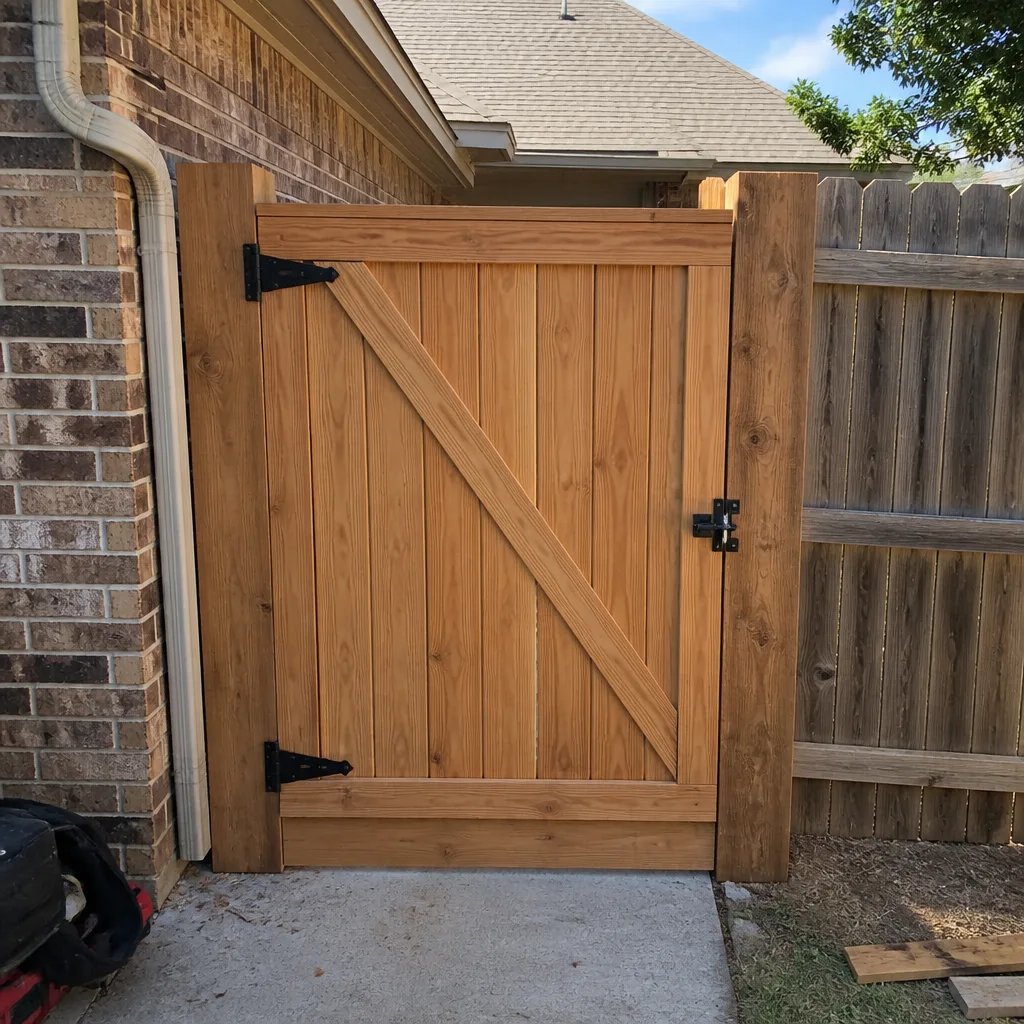 After
After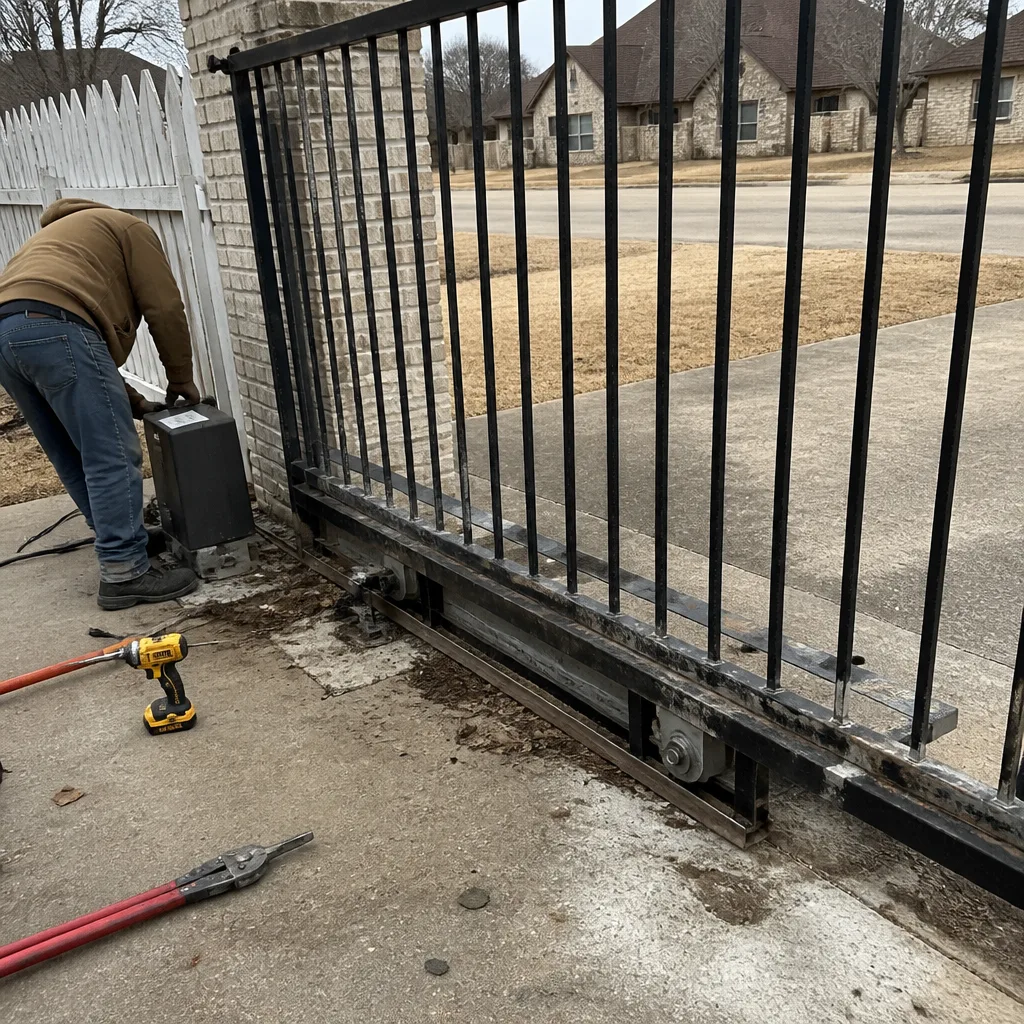 Before
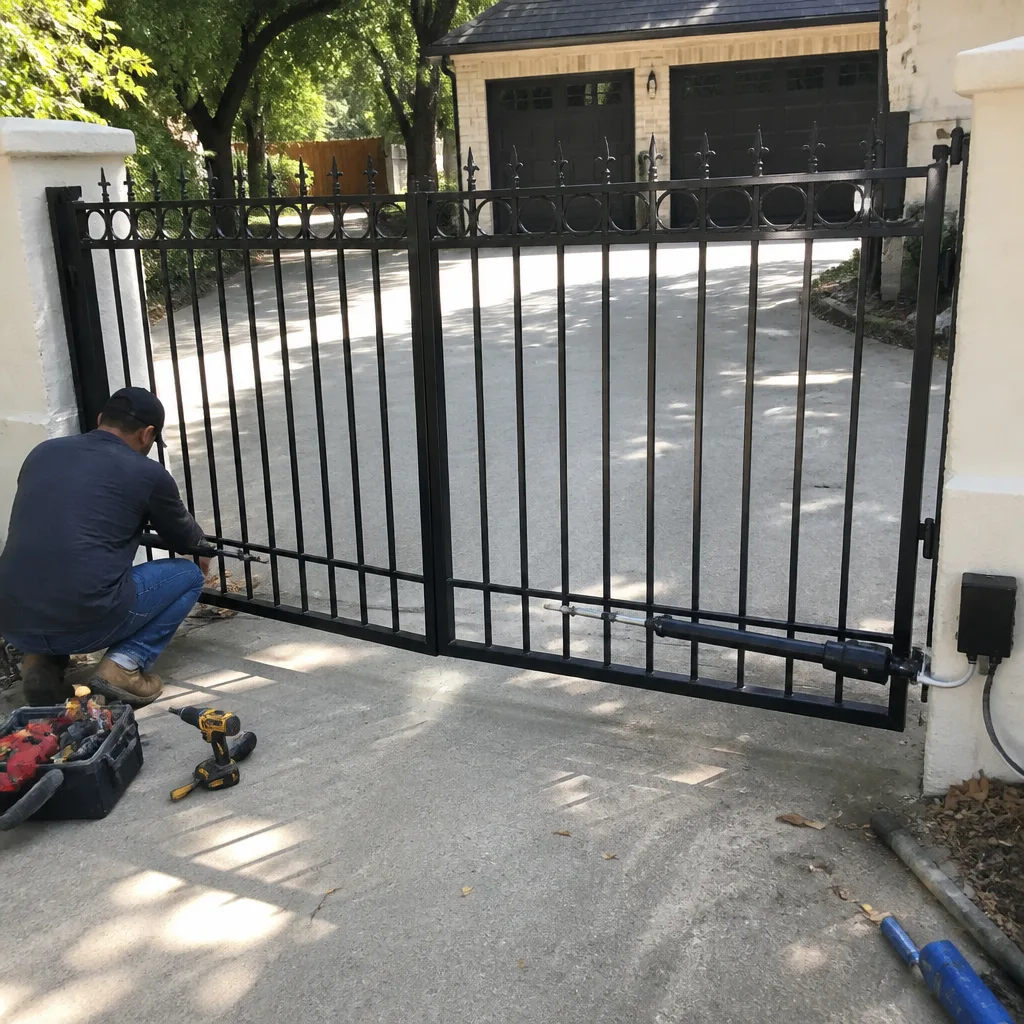 After
After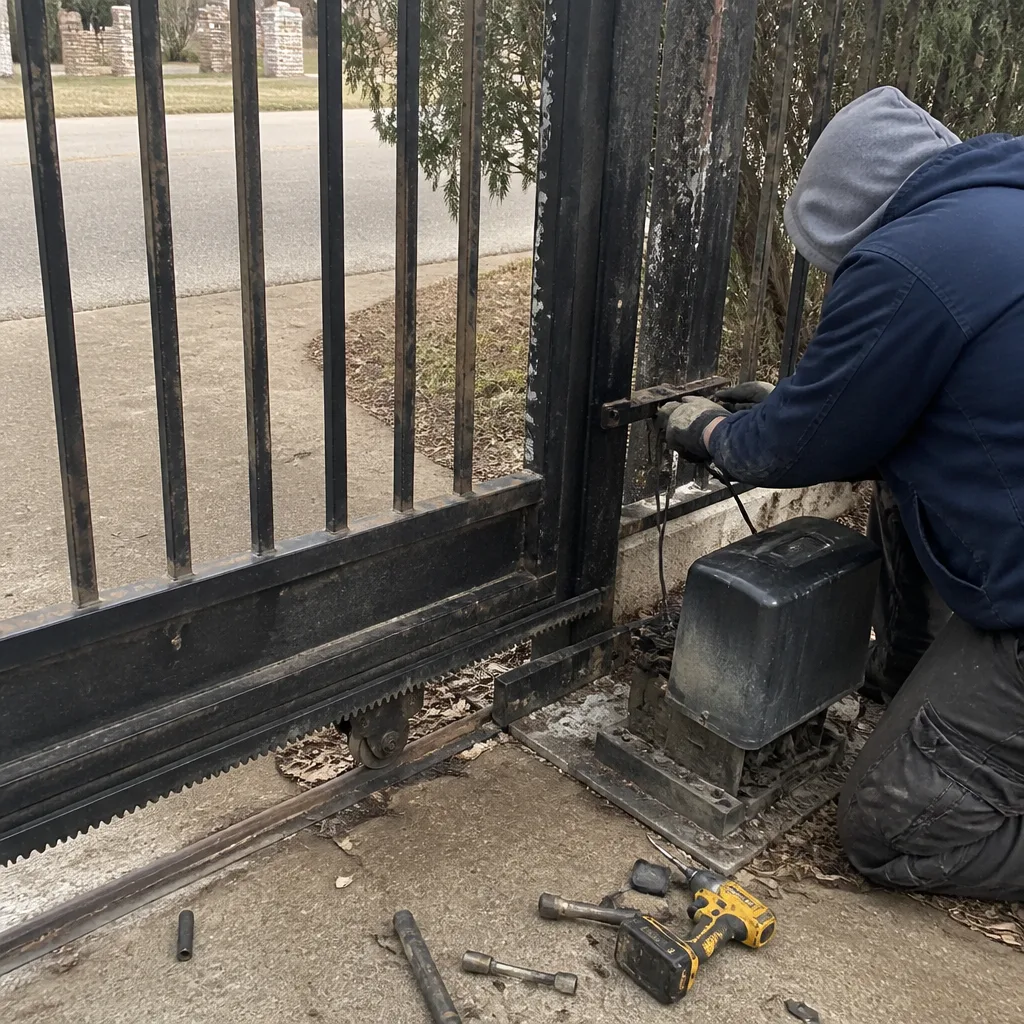 Before
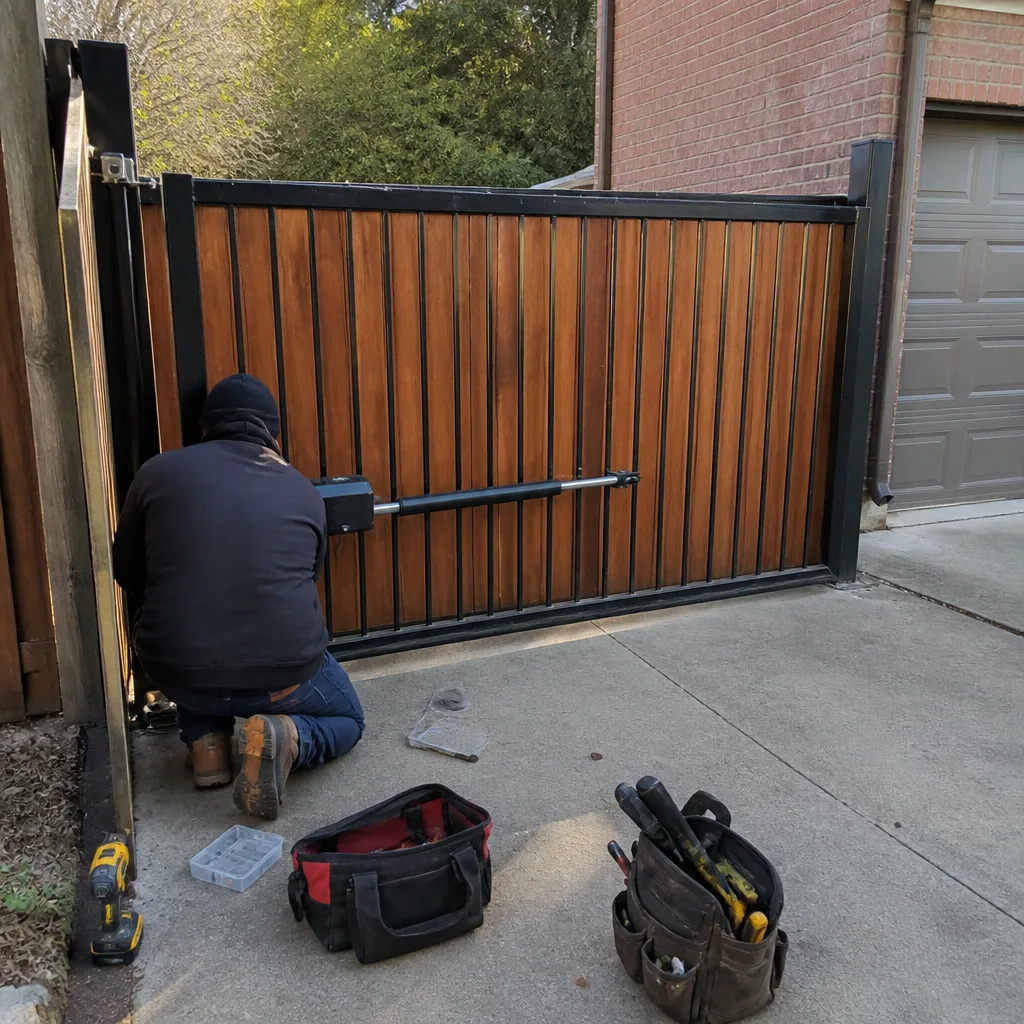 After
AfterGate Repair Warning Signs: A Burleson Homeowner’s Reference Guide
Most gate failures in Burleson don’t happen all at once. They announce themselves weeks or months in advance, in small ways that are easy to dismiss: a half-second hitch in the opener, a hinge that groans a little louder after a rain, a keypad that needs a firmer press than it did last spring. Homeowners who catch these early signals spend a few hundred dollars on a repair. Those who don’t often face a full gate replacement that runs into the thousands, usually at the worst possible moment. This guide walks through exactly what to look for, what each warning sign means, and when a trained gate technician in Burleson should be the one to address it.
Quick Answer
If your gate drags, hesitates, grinds, leans, or no longer closes square in Burleson, those are early warning signs that something specific is failing, usually a hinge, a wheel, a motor capacitor, or a safety sensor. Catching these signs early keeps repair costs in the $150 to $500 range in most cases. Ignoring them leads to full gate or opener replacement, which typically runs $1,800 to $6,000 in this market depending on size, material, and automation.
Table of Contents
- Warning Sign 1: New or Changing Sounds
- Warning Sign 2: Visible Movement Problems
- Warning Sign 3: Electrical and Automation Symptoms
- Warning Sign 4: Structural Red Flags
- How Burleson Weather Accelerates Gate Wear
- What Common Gate Repairs Cost in Burleson
- Common Mistakes to Avoid
- When to Call a Professional
- Frequently Asked Questions
We’ve repaired thousands of driveway gates across Johnson County, and the pattern is consistent. The gates that last forty years are the ones whose owners paid attention at the first creak. The gates that fail catastrophically are the ones where a small problem ran unchecked for two or three seasons. We wrote this reference guide so Burleson homeowners know exactly what they’re looking at, and what it means.
Warning Sign 1: New or Changing Sounds
A healthy gate makes a predictable sound: a low hum from the motor, the smooth roll of wheels on track, a soft thud when the latch seats. When that sound changes, something mechanical has changed with it. The sound is the gate telling you where the problem lives.
Here are the most common sounds we hear on service calls in Burleson, and what each one usually means:
- A high-pitched squeal or screech during operation: Almost always a dry or failing bearing in a wheel, roller, or hinge. Left alone, the bearing seizes, then the wheel stops rolling and starts dragging, which destroys the track or the wheel itself.
- A low grinding or metal-on-metal scrape: The gate has dropped out of square and is dragging against the ground, the post, or the track. This is often a hinge problem rather than a wheel problem. The grinding is the sound of steel removing steel.
- A repetitive clicking when you press the remote or keypad: The receiver is getting power and signal, but the motor is not engaging. On LiftMaster and DoorKing units this is commonly a failed capacitor or a burned relay on the control board.
- A thunk or clunk at the start or end of travel: The travel limits have drifted or the physical stop is worn. The motor is slamming the gate into the post instead of stopping it softly. Every thunk shortens the life of the gearbox.
- A hum with no movement: The motor is energized but the drive mechanism is not turning. On chain-drive openers this usually means a broken chain or stripped gear. On gate arms it often means the internal clutch has let go.
One thing we tell every Burleson homeowner: do not turn up the opener’s force setting to push through a new sound. That does not fix the problem. It just makes the motor work harder against whatever is binding, which turns a $200 hinge repair into a $1,200 opener replacement. If your gate has started making a sound it did not make last month, that is the time to investigate.
Warning Sign 2: Visible Movement Problems
You can see a gate problem before you hear it, if you’re watching. The motion of a properly operating gate is smooth and consistent from start to finish. Any deviation from that, any hesitation or jerk or sag, is a mechanical issue expressing itself physically.
These are the movement patterns that flag trouble, ranked roughly from least to most urgent:
- Hesitation before movement: You press the remote and there’s a beat, then the gate starts. On hydraulic operators this can be normal in cold weather. On electromechanical openers it usually means the motor is struggling against resistance somewhere in the run. Check for debris in the track first, then the wheels.
- Jerky or stuttering motion: The gate moves in fits instead of one continuous glide. This is typically a wheel or roller that is no longer round, or a track that is pinched. The flat spot on the wheel creates a bump every revolution. Over time those bumps oval out the axle holes.
- Slowing mid-run: The gate starts fine and then bogs down halfway through. Something is binding at a specific point in the travel, usually a sagging section or a hinge that has worn enough to drop the gate into contact with the track or ground at mid-span.
- Over-travel at the stop: The gate swings or slides past where it used to stop, then the motor reverses it back. Travel limit sensors have drifted or the physical stop has worn down. This puts the whole stopping force on the opener gearbox instead of the stop post.
- Visible sag or lean: The gate no longer sits square in its opening. You can see a V-shaped gap at the top of the latch side, or the latch no longer lines up with the receiver. This is a hinge failure or a post that has moved. It will not self-correct.
In our experience, movement problems are the ones Burleson homeowners live with the longest, because the gate still opens and closes. It just does it badly. But every cycle with a binding wheel or a sagging hinge is a cycle that is wearing out two or three other components downstream. The fix is almost always cheaper before the gate visibly leans.
Warning Sign 3: Electrical and Automation Symptoms
When the mechanical side of a gate fails, you can usually see or hear it. When the automation side fails, the symptoms are quieter and easier to misdiagnose. These are the electrical warning signs that warrant a close look.
- Remote range is shrinking: You used to be able to open the gate from the end of the street. Now you have to be at the driveway. Range loss is rarely the remote battery. It’s usually a failing receiver module, a loose antenna wire, or radio interference from a new device in the area. On Ghost Controls and Mighty Mule systems, we see this more in the summer when the control board runs hot.
- The gate reverses for no reason: The gate starts closing, then stops and reopens like something tripped the safety sensor. If you’ve checked for actual obstructions and the path is clear, the photo eye may be out of alignment, dirty, or failing. In Burleson, the fine dust that blows up from dry ground coats sensor lenses fast.
- Intermittent operation: Works in the morning, dead by afternoon. Or works three times, then ignores the fourth command. Thermal overload on the motor or a hairline crack in the control board is usually behind this. Intermittent problems are the hardest to diagnose because the system behaves when anyone is looking at it.
- Keypad works sometimes, not others: If the keypad is older and the buttons need a firmer press than they once did, the membrane switch is wearing out. If the whole keypad goes dead intermittently, it’s usually a wiring or power issue at the keypad’s power source, not the keypad itself.
- The gate opens fine but will not close: This is almost always the safety sensor circuit. The opener thinks something is in the path. If the photo eye is clean and aligned, the sensor itself has likely failed. Closing the gate by holding the override is a temporary measure, not a fix.
One thing worth saying plainly: a gate opener is a piece of industrial equipment bolted to your driveway and exposed to Texas weather. The electronics in an Elite or DoorKing unit are not like the electronics in a garage door opener. They run hotter, they cycle more often, and they fail more expensively. Respect the early electrical symptoms, because the final symptom is a gate that will not move at all.
Warning Sign 4: Structural Red Flags
Structural problems are the ones that make gate technicians take a slow walk around the whole installation. A mechanical or electrical component can be swapped. A structural problem means the bones of the installation have moved, and that’s a different category of work.
These are the structural warning signs we tell Burleson homeowners to check at least twice a year:
- Gaps appearing at hinge points: Look at where the gate attaches to the post. If you can see daylight through the hinge knuckle, or the hinge pin is riding at an angle, the hinge bearing is worn or the post has shifted. This is the single most common reason a heavy steel gate starts to sag.
- Cracks in the concrete pad or footing: The post is mounted in concrete. If that concrete starts to fracture, the post starts to move, and everything attached to the post moves with it. Hairline cracks are often cosmetic. Cracks wider than a quarter inch, especially widening, are structural.
- Fence line pulling away from the gate post: The post is not just holding the gate. It’s anchoring the fence at that point. If the fence rail starts to separate from the gate post, the post is leaning under load. In Burleson’s clay soil, which swells and shrinks dramatically with moisture, posts move more than homeowners expect.
- Rust bleeding through paint or powder coat: Surface rust is cosmetic. Rust that bubbles under the coating or flakes off in sheets means the steel underneath is losing thickness. On a gate that weighs 400 pounds, loss of structural steel is a safety issue, not an appearance issue.
- Weld cracks at stress points: Look at the corners of the frame, where the pickets attach to the rails, and where the gate frame meets the hinge side. A cracked weld looks like a dark jagged line in the metal. Weld cracks grow with every opening and closing cycle.
Structural issues need a welder’s eye. The repair is not a part swap. It’s cutting out the compromised section, reinforcing as needed, and restoring the gate to square. Done wrong, structural patch jobs fail the same way the original did, often faster. Done right, a structural repair should outlast the rest of the hardware on the gate.
How Burleson Weather Accelerates Gate Wear
Burleson’s climate does specific things to gate hardware, and it’s worth understanding the mechanism so you can plan maintenance around it. We’re not dealing with theory here. This is what we see on service calls across the city, season after season, year after year.
The summer heat is the biggest factor. From June through September, the metal on your gate can reach 140 degrees in direct afternoon sun. The control board inside the opener housing runs even hotter, especially if the unit faces west. Electronics age faster at temperature. Capacitors fail. Solder joints crack on control boards. A ten-year-old opener in Burleson has endured thermal stress equivalent to a fifteen-year-old opener in a cooler climate. This is why we recommend checking opener function in August, not just in March.
The soil movement is the second factor. Burleson sits on the Eastern Cross Timbers transition, and the clay-heavy soil here expands hard when it rains and contracts hard when it doesn’t. Gate posts set in this soil can move a quarter inch between wet and dry seasons. It doesn’t sound like much. Multiply that movement by the ten-foot lever arm of a heavy gate and the result at the latch side is measured in inches. This is why gates that were square when installed are suddenly binding in July. It’s also why proper post depth and concrete volume matter so much at installation.
The freeze-thaw cycle in winter matters too. North Texas winters are not Minnesota winters, but we get enough nights below freezing for water that has seeped into bearings, hinge pins, and lock mechanisms to turn to ice, expand, and force joints apart. After a few seasons of this, hinge pins that looked tight are suddenly sloppy. We see this most clearly in January and February, when the first freeze of the season is followed by calls about gates that suddenly seem loose.
Wind is an underrated factor. Burleson gets more sustained wind than most homeowners register. A 300-pound solid-panel gate acts like a sail in a 30 mph gust. That wind load transfers straight to the hinges and the post. Over time, wind fatigue loosens every connection. Solid gates wear out faster than open-picket gates in this market, and we see the difference consistently.
The practical takeaway: a gate in Burleson needs twice-yearly attention regardless of brand or quality. Spring inspection after the freeze-thaw cycle ends, and fall inspection after the summer heat peaks. The $89 seasonal tune-up we offer exists for exactly this reason. Twenty minutes of attention twice a year prevents most of the repairs in this guide.
What Common Gate Repairs Cost in Burleson
We believe in giving people real numbers. Here’s what gate repair work typically costs in the Burleson market as of this writing. These are ranges we quote from, covering the common failures described in this guide. Every job is quoted and agreed before any work starts. No surprises on the bill, ever.
- Hinge replacement, single gate: $180 to $450 depending on gate weight and hinge type. Most single residential driveway gates fall at the lower end.
- Wheel or roller replacement, slide gate: $150 to $350 including the wheel, axle, and adjustment. More if the track is also worn and needs section replacement.
- Track repair or replacement, per linear foot: $35 to $75 depending on track gauge and mounting type. A 20-foot run typically runs $700 to $1,500 to replace.
- Capacitor replacement on opener: $120 to $220 parts and labor on most brands, including LiftMaster, DoorKing, and Elite units.
- Control board replacement: $350 to $850 depending on brand. FAAC and BFT boards run at the higher end. DoorKing and Linear boards land in the middle.
- Photo eye or safety sensor replacement: $150 to $300 per sensor, including alignment and testing.
- Keypad replacement and programming: $200 to $400 for most residential keypads, including wiring check and programming.
- Full opener replacement (motor and control unit): $1,200 to $3,500 installed, depending on brand, gate weight, and whether any wiring or mounting needs rework.
- Weld repair, per point: $120 to $300 depending on access, position, and prep work required. A full structural repair on a heavy steel gate can land at $500 to $1,200.
- Complete gate replacement (no automation): $2,500 to $6,000 for a standard steel driveway gate, depending on size, design, and finish.
These numbers are Burleson market prices, not national averages. They reflect what we and our competitors actually charge here. They are current as of this writing. Get a written quote before authorizing any work, and remember that a repair estimate from a company that has not inspected the gate is a guess, not a quote.
One more thing about cost. A hinge replacement at $300 feels like a lot when the gate still opens. A full gate replacement at $4,500 feels like a lot more. The hinge replacement is the version of the problem that was caught early. That’s the whole point of this guide.
Common Mistakes to Avoid
- Lubricating a failing component to quiet the noise. Spraying lubricant on a grinding wheel or squealing hinge masks the symptom for a few days. It does not fix the wear. By the time the sound comes back, the damage is worse. Grease belongs on parts that are healthy, not on parts that are already failing.
- Adjusting the opener force to push through a new bind. We said it earlier and we’ll say it again because this mistake is so common. When the gate starts dragging and the homeowner turns up the force setting, the motor starts winning the fight against the physical problem. It wins by burning itself out. The force setting exists to prevent property damage and injury. It is not a bandage.
- Ignoring a gate that’s only failing occasionally. Intermittent problems are the most tempting to dismiss because the gate works every time you show it to someone. But intermittent electrical faults do not heal. They become permanent. The intermittent failure is the early warning.
- Bargain-patrol repair shopping. The cheapest quote on a gate repair in Burleson is cheap for a reason. Maybe it’s a handyman who has never worked on your brand of opener. Maybe it’s a quote that assumes no structural work. Maybe it’s a business that will not be answering the phone in two years. Our free second opinion on any written estimate exists because we see too many homeowners burned by lowball quotes that doubled once the work started.
- Delaying a structural fix because the gate still works. A cracked weld or leaning post is not going to fail at your convenience. It will fail at 7:30 on a Tuesday morning when you’re trying to leave for work, or during a family emergency. Structural problems should be addressed when they’re found. The gate that still works is the cheapest time to fix it.
- Prop-welding or DIY structural repairs on a heavy gate. A driveway gate is a moving wall of steel. A weld that fails on a decorative accessory is an annoyance. A weld that fails on a hinge point or latch is a safety event. Do not attempt structural welding on a gate unless you are a certified welder with experience in gate fabrication. The risk is not worth the savings.
When to Call a Professional
Some gate maintenance is homeowner-friendly: clearing the track, checking the photo eyes for dust, tightening an obviously loose bolt, keying in the code to make sure the keypad wakes up. The rest of it belongs to someone with training, tools, and the brand knowledge for your specific opener.
Call a gate professional when any of these applies: the gate is sagging or leaning, you see cracks in the welds or the concrete footing, the opener is making a humming sound without moving the gate, the safety sensor is triggering reversals you can’t resolve by cleaning and realignment, the gate reverses direction mid-cycle, or any part of the system has stopped responding entirely. If the problem involves the motor, the control board, the wiring, the hinges, the posts, or any weld, that’s professional territory. A heavy automated gate is a piece of industrial machinery. Treat it accordingly.
Ironworks Gate Co. offers free estimates in Burleson. If you’ve spotted any of the warning signs in this guide, call (469) 564-8046 and a background-checked, uniformed technician will come out, inspect the gate properly, and give you a written price before any work begins.
Frequently Asked Questions
Gate repair in Burleson typically costs between $150 and $500 for common fixes like hinge replacement, wheel replacement, and capacitor swaps. Control board replacements run $350 to $850. Full opener replacements run $1,200 to $3,500. Every job is quoted and agreed in writing before work starts. Call (469) 564-8046 for an exact quote on your specific gate. Estimates are free.
The earliest warning signs are new sounds during operation, visible sag or drag, hesitation before movement, shrinking remote range, and intermittent keypad or remote response. Any of these indicates a component is wearing. Catching it now usually means a repair under $500. Waiting usually means a replacement in the thousands.
Twice a year in Burleson. The summer heat degrades electronics, the clay soil moves the posts, and the winter freeze-thaw loosens bearings and pins. A spring inspection and a fall inspection catch most issues before they become failures. We offer an $89 seasonal tune-up that covers the critical checks in about an hour.
Most common repairs are completed in a single visit. Hinge replacements, wheel swaps, capacitor replacements, and sensor alignments are same-visit work when parts are on the truck. A live person answers our phone 24 hours a day, 7 days a week. Call (469) 564-8046 and describe the problem. We’ll tell you straight what to expect.
We service LiftMaster, FAAC, BFT, Linear, Viking, Ghost Controls, DoorKing, Elite, and Mighty Mule. That means the correct diagnosis gets made on the first visit, whatever is on the driveway. Our technicians are certified on all nine brands, not just the one the original installer happened to sell.
Every job we complete is protected by our written 90-Day Done Right Promise. If it’s not right, we come back and make it right. No paperwork, no arguing, no exceptions. That’s been the standard on every gate job since 1984.
The Bottom Line
A gate is a piece of machinery, and machinery talks. The squeal, the sag, the hesitation, the shrinking remote range: these are not quirks. They are diagnostics, free for the listening. The homeowner who listens at the first creak spends a few hundred dollars. The homeowner who waits spends a few thousand. In Burleson’s heat, soil, and wind, the margins are thinner than elsewhere. Check your gate this week. If something looks or sounds different than it did last season, call a professional before the gate makes the decision for you.
Written by Victor Salinas, Owner at Ironworks Gate Co., serving Burleson since 2013.